

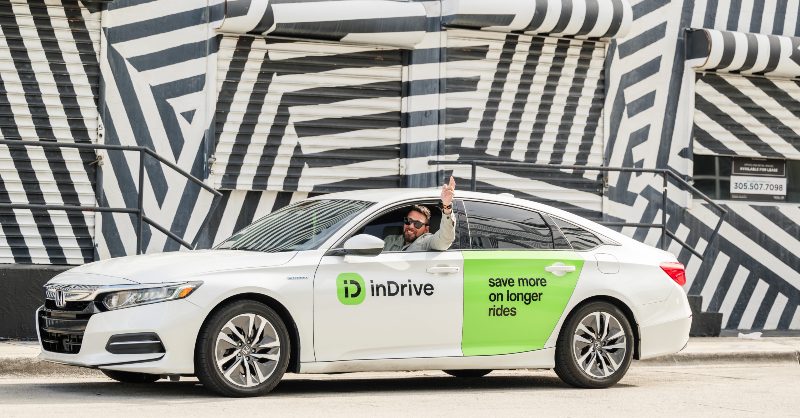
inDrive sharpens 2026 strategy around flexibility and new services
inDrive, the ride-hailing platform known for its unique fare negotiation model, is preparing an aggressive expansion in 2026 that will lean heavily on two pillars: grocery delivery and user-driven price flexibility. Backed by new research from Oxford Economics, the company is positioning its model as a direct response to cost-of-living pressures and income volatility in emerging markets.
According to the study, shared by Chief Growth Officer Andres Smit, roughly 75% of negotiated trips on the platform are associated with higher ride activity in emerging economies. The findings suggest that when riders and drivers can agree on a price rather than accept a fixed algorithmic fare, overall usage increases and market participation broadens.
Fare negotiation emerges as a competitive differentiator
While most global ride-hailing platforms rely on opaque dynamic pricing algorithms, inDrive has built its brand around a more transparent, human-driven approach. Riders propose a fare, drivers counter or accept, and a final price is agreed in real time. The new Oxford Economics analysis indicates that this model does more than simply shift who pays what; it can reshape demand.
In many emerging markets, riders face sharp swings in fuel prices, inflation and income uncertainty. A rigid, fully automated fare system often fails to reflect local realities, especially during economic stress. The research highlights that the ability to negotiate:
- Encourages price-sensitive riders to stay on the platform instead of switching to informal transport.
- Gives drivers more agency to account for traffic, distance and operating costs.
- Improves perceived fairness, which in turn drives repeat usage.
Andres Smit argues that this flexibility is no longer a niche feature, but a structural advantage as global urban mobility adapts to rising living costs. By allowing both sides to set expectations up front, inDrive aims to reduce the friction that often accompanies surge pricing and non-transparent fare formulas.
Grocery delivery: inDrive’s next frontier
Beyond core ride-hailing, inDrive is preparing to extend its negotiation-first model into grocery delivery in 2026. The move places the company in direct competition with established on-demand delivery platforms that typically rely on fixed delivery fees and platform-set commissions.
Why groceries, and why now?
The grocery segment has become one of the most hotly contested battlegrounds in the last-mile logistics and quick commerce space. As consumers increasingly expect same-day or even under-one-hour delivery, platforms must balance speed, cost and profitability. For many households in emerging markets, however, the primary barrier is not speed but affordability.
By allowing customers to propose a delivery fee and enabling couriers to accept or counter that offer, inDrive intends to replicate the same demand-boosting effect seen in passenger transport. The company’s leadership believes that negotiated pricing can:
- Open grocery delivery to lower-income households that are priced out by fixed-fee models.
- Help couriers better account for distance, order size and local traffic conditions.
- Reduce cart abandonment caused by unexpectedly high delivery charges at checkout.
This strategy also positions inDrive as a partner to small, independent retailers that lack the scale to negotiate favorable terms with large delivery aggregators. Flexible fees may enable neighborhood stores to participate in the digital economy without surrendering margins to rigid commission structures.
Implications for emerging markets and urban mobility
The emphasis on negotiation taps into a broader shift in how urban mobility and digital marketplaces operate in developing economies. Many cities in Latin America, Africa, the Middle East and Asia have long histories of informal bargaining over transport and services. By formalizing this behavior in a digital platform, inDrive is effectively codifying a cultural norm into a scalable business model.
The Oxford Economics study suggests that this alignment with local practices is not merely cosmetic. The data indicating that 75% of negotiated trips correlate with increased ride volumes underscores how culturally attuned pricing structures can unlock latent demand. For policy makers and urban planners, such models may offer new levers to expand access to safe, traceable transport without heavy subsidies.
At the same time, the approach raises important questions around driver earnings, platform regulation and consumer protection. Regulators in key markets are closely scrutinizing how negotiation-based platforms ensure that drivers are not pressured into accepting unsustainably low fares, and that riders are not exposed to discriminatory pricing. inDrive will need to demonstrate robust safeguards, clear dispute mechanisms and transparent data practices to maintain trust as it scales.
Strategic outlook for 2026 and beyond
For 2026, inDrive is expected to prioritize three interconnected objectives: deepening its presence in emerging cities, expanding into grocery and other delivery verticals, and refining its negotiation tools with better data analytics and AI-assisted matching.
Internally, the company is likely to invest in technologies that can recommend fair price ranges to both riders and drivers, or to shoppers and couriers, while preserving the ability to negotiate. Such tools could reduce friction for new users who are unfamiliar with local price norms, while still avoiding fully opaque algorithmic pricing.
As competition intensifies across both ride-hailing and delivery, the findings from Oxford Economics give inDrive a research-backed narrative: in markets where price sensitivity is high and informal bargaining is common, flexibility is not a luxury feature but a growth driver. The coming year will test whether that thesis can be replicated at scale in grocery delivery and other services, and whether user-driven pricing can coexist with the demands of a sustainable, regulated digital economy.