

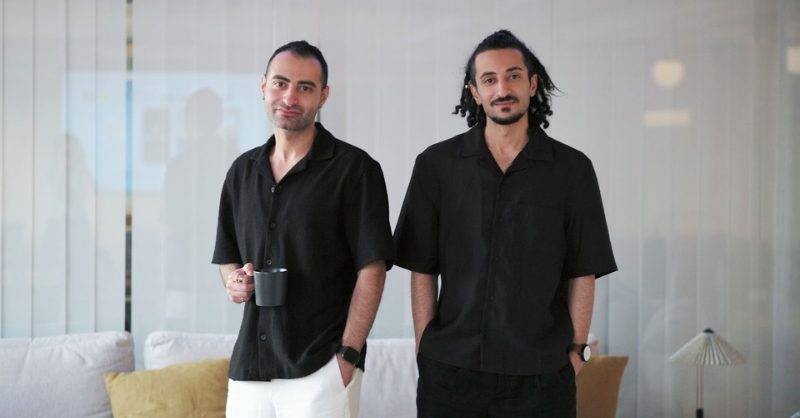
Immigrant Brothers Turn AI Vision into a Marketing Powerhouse
Two immigrant brothers from Damascus have quietly built one of the most talked‑about tools in modern marketing: Migma AI, a platform they call the “Lovable for emails.” Designed to craft fully branded marketing emails in seconds, the system is already being used by heavyweight names such as Cloudflare, Wix and Versace, signaling a shift in how global brands approach email communication.
Behind the platform stand co-founders Adam Lababidi and Liam Lababidi, whose journey from the turmoil of Damascus to building a cutting‑edge AI marketing product reflects both the power of technology and the resilience of immigrant entrepreneurship.
What Is Migma AI and Why Brands Are Paying Attention
Migma AI positions itself as a dedicated engine for creating on-brand, high‑performing marketing emails at scale. Instead of generic, one‑size‑fits‑all outputs, the platform focuses on understanding a brand’s unique voice, visual identity and commercial goals, then automating the creation of campaigns that reflect that identity with precision.
From brief to branded email in seconds
Marketers typically spend hours drafting, revising and aligning each campaign with brand guidelines. Migma AI compresses this workflow into seconds by using advanced AI models trained on a company’s existing communications, style guides and product data. Users input a short brief, campaign objective or product update, and the system generates:
- Subject lines optimized for open rates
- Body copy tailored to the brand’s tone of voice
- Layout suggestions aligned with brand design systems
- Variations for A/B testing and audience segments
For brands running frequent campaigns across multiple markets, the promise is simple: more output, more consistency and less manual work.
Why “Lovable for Emails” Matters in a Crowded AI Market
The marketing technology space is saturated with tools promising automation and personalization. What differentiates Migma AI is its tight focus on email and its deliberate positioning as the “Lovable for emails” – a reference to the new generation of AI productivity tools that feel approachable, intuitive and enjoyable to use.
Moving beyond generic AI copy
Many marketers have experimented with generic AI writing tools only to find that the output feels bland, off‑brand or time‑consuming to fix. Migma AI addresses this by anchoring its system in:
- Deep brand training, using existing campaigns, style guides and messaging pillars
- Controls that allow teams to lock in brand voice and compliance rules
- Collaboration features that align marketing, design and legal teams
The result is a tool that aims to feel like an embedded creative assistant dedicated to email, rather than a general-purpose chatbot.
Trusted by Cloudflare, Wix and Versace
Early adoption by brands such as Cloudflare, Wix and Versace gives Migma AI immediate credibility in an industry where trust and performance are paramount.
Enterprise-grade expectations
These companies operate at global scale, sending millions of messages to customers and partners. Their use of Migma AI suggests the platform meets demanding standards in:
- Deliverability – generating content and structures that avoid spam filters
- Compliance – respecting brand, legal and regional regulations
- Localization – adapting messaging across languages and markets
- Performance tracking – measuring opens, clicks and conversions tied back to AI-generated content
For luxury names like Versace, staying on‑brand is non‑negotiable. Their willingness to integrate an AI system into their email stack underscores the growing confidence in specialized AI marketing platforms.
From Damascus to the Global SaaS Stage
The story of Adam Lababidi and Liam Lababidi is emblematic of a broader trend: immigrant founders reshaping the global SaaS and AI landscape. Having left Damascus, they navigated new cultures, education systems and markets before building a product that now sits inside the workflows of world-renowned companies.
Immigrant entrepreneurship as a driver of innovation
Research across major tech ecosystems consistently shows that immigrant founders are over‑represented among high‑growth startups, especially in cutting‑edge fields like machine learning, automation and developer tools. The Migma AI story aligns with this pattern: identifying a painful, global problem – slow, inconsistent email production – and solving it with a focused, technically sophisticated product.
By branding their product as “Lovable for emails,” the Lababidi brothers also tap into a cultural shift in software: users increasingly expect enterprise-grade power wrapped in consumer‑grade usability.
AI’s Growing Role in the Future of Email Marketing
Email remains one of the highest‑ROI channels in digital marketing, but it is also one of the most resource‑intensive. Teams must balance creativity, compliance, personalization and performance analytics. As AI automation matures, platforms like Migma AI are redefining what marketing teams look like and how they operate.
From manual production to strategic oversight
Instead of drafting every line from scratch, marketers can shift to a model where they:
- Set strategy and messaging frameworks
- Use AI tools to generate initial versions and variations
- Review, refine and approve content at a higher level
- Continuously optimize based on performance data
This transition mirrors changes already underway in other creative disciplines, where generative AI handles repetitive production work while humans focus on brand, positioning and storytelling.
A New Benchmark for AI-Driven Brand Communication
As more brands follow the lead of Cloudflare, Wix and Versace, specialized platforms like Migma AI are poised to become core infrastructure in modern marketing stacks. The combination of immigrant ingenuity, targeted product design and enterprise adoption sets a new benchmark for what AI‑driven brand communication can achieve.
For the Lababidi brothers, the journey from Damascus to building a globally used AI email platform is both a personal milestone and a signal of where the next wave of marketing innovation is headed.