

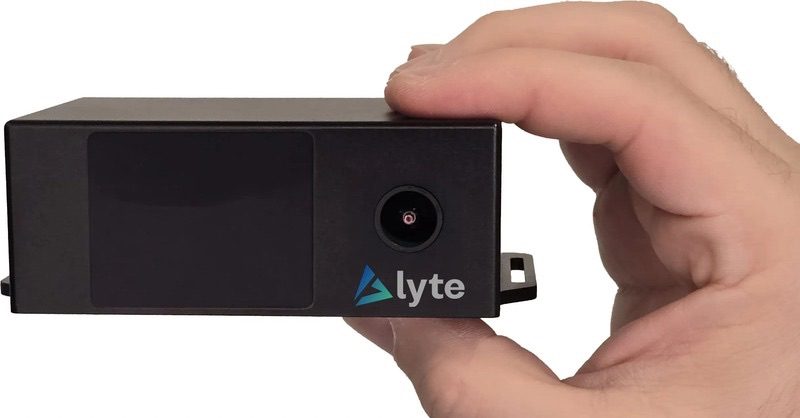
Ex-Apple Face ID Engineers Launch Ambitious Robotics Vision Startup
A group of former Apple engineers who helped build the company’s pioneering Face ID technology has emerged from stealth with a significant war chest: $107 million in funding to develop what they describe as a “visual brain” for robots.
Backed by top-tier investors, the new venture aims to transfer the advances made in smartphone facial recognition and computer vision into the world of industrial and service robotics, promising machines that can see, interpret, and respond to their surroundings with far greater accuracy and autonomy.
From Face ID to Full-Scale Robotic Vision
The founding team, composed of senior engineers and computer vision experts who previously worked on Apple’s Face ID hardware and AI algorithms, is leveraging years of experience in secure, real-time visual processing.
Face ID transformed the way millions of users unlock their phones by combining depth-sensing cameras, infrared technology, and advanced machine learning. The new startup seeks to apply similar principles to robots, but on a much broader and more complex scale.
A “Visual Brain” for Machines
Instead of building complete robots, the company is focused on a core intelligence layer: a modular “visual brain” that can be integrated into industrial arms, mobile robots, warehouse systems, and next-generation manufacturing lines.
This visual brain combines:
By giving robots a much richer understanding of their environment, the platform aims to enable tasks that have historically been difficult or impossible for machines, such as handling deformable objects, working safely side-by-side with people, and adapting to changing conditions on the factory floor.
Why Visual Intelligence Is the Next Frontier in Robotics
Over the past decade, industrial automation has made major strides, but many systems still rely on rigid programming and simple sensors. Robots excel at repetitive, predictable tasks, yet struggle when conditions vary even slightly.
The founders argue that the missing ingredient is human-like vision. If robots can:
then entire categories of work could be automated more safely and flexibly.
For manufacturers, logistics providers, and e-commerce giants, this could mean fewer errors, higher throughput, and the ability to reconfigure operations quickly in response to demand. For workers, improved vision systems could shift robots away from being caged, isolated machines and toward being collaborative tools that operate in shared spaces.
$107 Million Vote of Confidence from Investors
The company’s $107 million raise signals strong belief from the investment community in the convergence of AI, edge computing, and robotics. While the full investor list has not been publicly detailed, the round reportedly includes a mix of leading venture capital firms and strategic backers from the manufacturing and technology sectors.
Such a large early-stage funding round suggests that investors see this as a foundational technology, not a niche feature. A robust visual brain could become a standard layer across many categories of robots, similar to how mobile operating systems and smartphone chipsets became shared platforms for entire ecosystems.
Commercial Focus: From Warehouses to Advanced Manufacturing
The startup is initially targeting sectors where visual perception can quickly unlock measurable returns:
By focusing on these high-value use cases, the company aims to prove that advanced vision is not just a research milestone but a direct driver of productivity and cost savings.
Technical Foundations: AI at the Edge
The heart of the platform is a tight integration of hardware and software optimized for edge AI — processing visual data directly on the robot or near the point of capture, rather than relying solely on the cloud.
Key technical pillars include:
This architecture draws heavily from the founders’ experience at Apple, where privacy, speed, and on-device intelligence were central to Face ID’s design. The same principles are now being applied to industrial environments, where reliability and security are equally critical.
Safety, Regulation, and Ethical Considerations
As robots become more perceptive and autonomous, questions around safety and ethics inevitably arise. The company is positioning its visual brain as a tool not only for efficiency but also for safer human-robot interaction.
Improved perception allows robots to:
At the same time, the startup will need to navigate emerging standards for AI safety, industrial robotics regulation, and data governance. Drawing on best practices from consumer technology, the team is expected to emphasize strict access controls, on-premise processing options, and minimal retention of identifiable visual data.
A New Phase in the Race for Smarter Robots
The emergence of this ex-Apple team with substantial capital underscores a broader shift in the robotics landscape. As AI models grow more capable and hardware becomes more efficient, vision is moving from a supporting feature to the central nervous system of automated systems.
If the company succeeds in making a plug-and-play visual brain that can be adopted across multiple platforms, it could accelerate the deployment of intelligent robots in factories, warehouses, and eventually public spaces. That, in turn, would intensify competition among established industrial players and new AI-native entrants.
For now, the startup is keeping many product specifics under wraps. But with $107 million in backing and a track record of shipping complex, high-stakes vision systems to hundreds of millions of users, the former Face ID engineers are positioned to play a defining role in the next generation of robotic intelligence.