

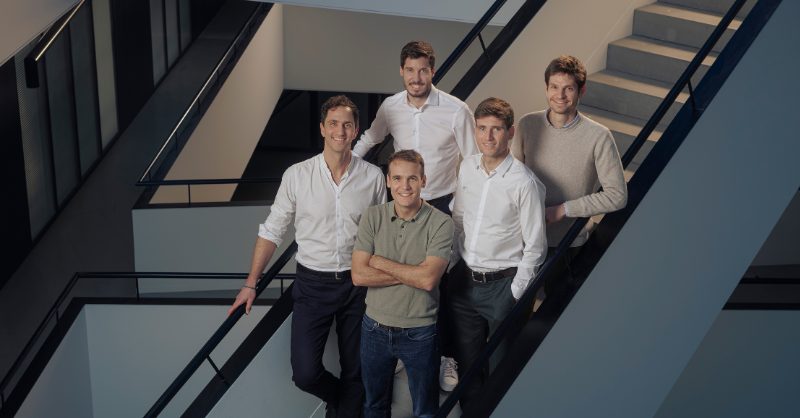
Swiss Neural Concept, a Switzerland-born developer of AI algorithms for engineering simulation, has raised $100 million as it pushes to modernize how products are designed and optimized. The funding positions the company to scale its software across industries where aerodynamics, thermal performance, and structural constraints can make or break timelines—from automotive and aerospace to industrial equipment and energy systems.
The round underscores a broader shift in engineering: teams are increasingly looking beyond traditional computer-aided engineering workflows and toward machine-learning-based approaches that can produce high-quality predictions faster, enabling more design iterations earlier in development. For manufacturers facing tighter margins, complex supply chains, and rising performance expectations, simulation speed is becoming a competitive lever rather than a back-office capability.
Why investors are betting on AI-first engineering simulation
Engineering teams have long relied on physics-based tools such as computational fluid dynamics and finite element methods to evaluate designs. Those tools remain essential, but they can be time-consuming and computationally expensive—especially when engineers need to run dozens or hundreds of variations to explore trade-offs.
Swiss Neural Concept is part of a growing cohort building “surrogate” models: machine-learning systems trained on high-fidelity simulation data that can approximate results much faster. The promise is not to replace physics, but to accelerate decision-making in the earliest phases of design, when changing geometry or materials is relatively inexpensive and the impact on final performance can be significant.
In practical terms, AI-accelerated simulation can help teams screen more concepts, reduce late-stage redesigns, and allocate high-performance compute to the most critical validation runs. As product cycles compress and sustainability requirements intensify, investors see these tools as infrastructure for the next era of industrial innovation.
What Swiss Neural Concept says it will do with the $100M
While specific deployment details may vary by customer and sector, funding at this scale typically supports three priorities for enterprise engineering software:
- Product development: expanding model capabilities, improving accuracy, and broadening support across physics domains such as fluid flow, heat transfer, and multi-physics problems.
- Enterprise readiness: strengthening security, compliance, deployment options, and integrations with existing CAD/CAE and product lifecycle management stacks.
- Go-to-market expansion: scaling sales, customer success, and partnerships to reach more global manufacturers.
For engineering organizations, adoption often depends on how seamlessly new tools fit within established workflows. That means integration with common design environments, support for versioning and traceability, and clear governance for how AI-generated predictions are validated and used in critical decisions.
The competitive landscape: a crowded, high-stakes market
The market for AI-driven simulation and design optimization is heating up. Established CAE vendors are adding machine learning features, while startups are building specialized platforms that promise faster iteration and lower compute costs. The differentiators increasingly come down to data strategy, usability, and trust: customers need to understand when a model is reliable, when it is extrapolating, and how results compare with high-fidelity solvers and real-world testing.
Key Industry Terms shaping buyer decisions include digital twin strategies, generative design, and design space exploration. In many organizations, these initiatives are no longer experimental; they are tied to measurable goals such as reducing energy consumption, improving range and efficiency, meeting noise regulations, and cutting time-to-market.
Trust, validation, and the “black box” problem
One of the most persistent questions in AI-based engineering is interpretability. Engineers are trained to challenge assumptions and verify results, and regulated industries require documentation and validation. AI approaches that provide uncertainty estimates, clear boundaries of applicability, and robust validation workflows are more likely to move from pilot projects into production use.
For Swiss Neural Concept, the ability to demonstrate consistent performance across varied geometries, operating conditions, and materials will be central to expansion—especially as customers attempt to standardize AI simulation across multiple product lines and global teams.
What it could mean for manufacturers and product teams
If AI-accelerated simulation continues to mature, the biggest change may be cultural rather than technical: design teams could iterate far more frequently, test more unconventional concepts, and make performance-driven decisions earlier. That shift can reduce the cost of mistakes, because problems found after tooling, certification, or production ramp are dramatically more expensive to fix.
Faster simulation also supports sustainability and efficiency goals. Whether it is optimizing airflow to reduce drag, improving thermal management for electronics, or cutting weight while maintaining strength, the ability to explore more options can lead to meaningful performance improvements—sometimes without radical changes in manufacturing.
From “one best design” to continuous optimization
In traditional workflows, teams often converge on a small set of designs due to time and compute constraints. AI-based approaches can make it feasible to evaluate a broader set of candidates, helping organizations understand trade-offs more rigorously. Over time, this can support a more continuous optimization mindset—where products are refined through data and simulation across generations, rather than redesigned in large, infrequent leaps.
What to watch next
The key signals following this $100 million raise will be enterprise adoption and measurable outcomes: deployments that scale beyond a single team, integration into standard toolchains, and documented reductions in development time or compute spend. Another major indicator will be how broadly Swiss Neural Concept can extend its models across different physics and industries without sacrificing accuracy and reliability.
As manufacturers look for ways to ship better products faster, funding momentum for AI-first engineering platforms suggests investors believe simulation is entering a new phase—one where speed, iteration, and validated machine learning become core to how modern products are built.