

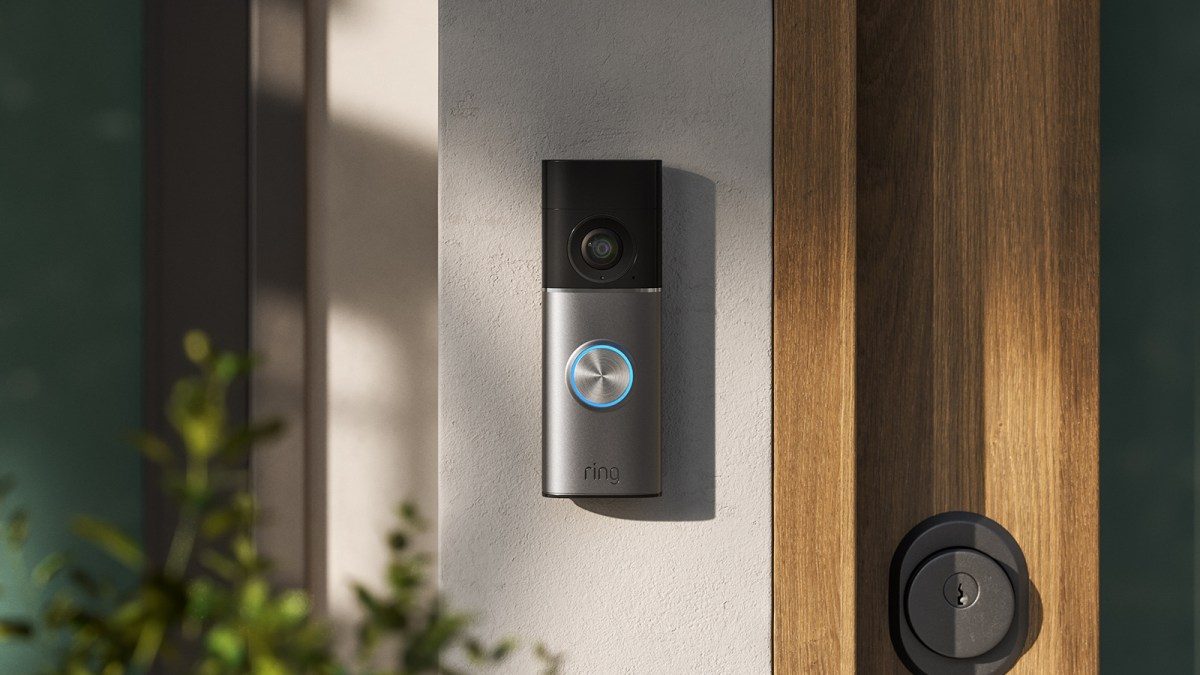
Amazon is extending its upgraded voice assistant, Alexa+, to the front door. A new feature called Greetings adds conversational AI to Ring video doorbells, aiming to help homeowners manage common doorstep interactions—whether that’s directing a courier to a safe drop spot, declining a salesperson, or asking a friend to leave a message when no one is available.
The capability, first reported by TechCrunch, positions the doorbell as more than a camera and motion alert system. With Greetings enabled, Ring can attempt to infer who is at the door by analyzing visible cues such as apparel, actions, and objects (for example, a uniform and a package). Alexa+ then responds using instructions set by the user, turning a previously reactive device into an automated “front desk” for the home.
What Alexa+ “Greetings” does at the door
At its core, Greetings is designed to reduce missed deliveries and minimize interruptions. When the system believes a visitor is a delivery worker dropping off a package, it can respond with preconfigured guidance—such as where to leave the parcel or how to approach the property.
Delivery instructions, signatures, and small conveniences
According to the report, the feature includes settings that let homeowners specify drop-off locations and even point drivers toward amenities like water or snacks left outside. If a delivery requires a signature and the homeowner isn’t present, Alexa+ can ask the courier when they might return and relay that message back to the user.
That kind of back-and-forth is meant to feel more natural than older, rigid doorbell responses. Rather than a single canned message, Alexa+ can carry a short conversation—an approach that reflects how AI assistants are increasingly being deployed in customer service and scheduling contexts.
Handling sales reps and service vendors
Greetings can also be set up to address unplanned visitors such as sales representatives or service vendors. Users can create instructions like: “If someone comes to the door trying to sell something, politely let them know we’re not interested.” In practice, that means the doorbell can respond consistently without requiring the homeowner to answer or even be home.
Taking messages from friends and family
For personal visits, Alexa+ can greet friends or family and ask them to leave a message, offering a lightweight alternative to a phone call or text when someone stops by unexpectedly.
How Ring decides who’s at the door
The key technical promise behind Greetings is that Ring can “determine” who is visiting based on visual context: clothing, behavior, and what a person is holding. That implies a form of on-device or cloud-based computer vision that classifies scenarios (delivery, solicitation, personal visit) and triggers the appropriate dialog.
This approach is different from identifying a specific person by name. Instead, it focuses on categorizing the interaction—package drop-off versus sales pitch—then using Alexa+ to speak on the homeowner’s behalf.
For consumers, the appeal is obvious: fewer interruptions, fewer missed deliveries, and more control over what happens at the doorstep. For Amazon, the feature also reinforces the company’s broader strategy of embedding Alexa into more devices and contexts, especially in the smart home where Ring already has a large installed base.
Accuracy risks: when automation misreads the situation
Even with careful tuning, the feature introduces an unavoidable risk: misidentifying what’s happening and responding inappropriately. The report notes a straightforward example—if a friend works in logistics and arrives wearing a delivery uniform, the system could treat them like a courier and ask them to leave a package somewhere rather than inviting them to leave a personal message.
These are not trivial edge cases. Doorstep interactions are highly variable: uniforms differ by region and company, people carry objects for many reasons, and lighting or camera angles can obscure details. A home’s front door is also a sensitive context, where a mistaken response can feel awkward at best and unsafe at worst.
- False positives: A non-delivery visitor is treated as a courier or solicitor.
- False negatives: A delivery is missed because the system fails to recognize the scenario.
- Social friction: Automated responses may come off as impersonal or inappropriate in nuanced situations.
Privacy and the shadow of Ring’s “Familiar Faces” debate
Greetings arrives as Ring continues to face scrutiny over how smart doorbells collect and process data. The report points to a prior, controversial Ring feature called Familiar Faces, which allows users to create a catalog of up to 50 known visitors. Once labeled, those individuals can be named in the Ring app’s timeline and notifications when they appear.
Even if Greetings is positioned as scenario-based rather than identity-based, it still relies on analyzing video at the doorstep—an area where consumers, regulators, and privacy advocates have increasingly demanded transparency. Questions that typically follow include what data is stored, for how long, whether processing happens locally or in the cloud, and what controls users have to opt in or manage retention.
For households considering the feature, the practical decision may come down to trade-offs: convenience versus the discomfort of a device that not only watches the front door, but also speaks autonomously based on its interpretation of what it sees.
What it means for the smart home market
By adding conversational AI to a doorbell, Amazon is pushing the smart home toward more autonomous “agent-like” behavior—systems that don’t just notify, but act. Competitors across the smart home ecosystem have been moving in a similar direction, but Ring’s scale gives Amazon a prominent proving ground for how well AI can handle real-world, high-stakes interactions.
If Greetings works reliably, it could become a new baseline expectation for premium doorbells: proactive delivery handling, automated visitor triage, and message-taking without the homeowner lifting a finger. If it fails—through misclassification, awkward interactions, or privacy backlash—it may reinforce skepticism about putting more AI between people and their front door.
For now, Amazon is betting that the promise of fewer missed packages and fewer unwanted interruptions will outweigh the risks, as Alexa+ continues expanding from a voice assistant into a broader layer of automated decision-making across the home.