

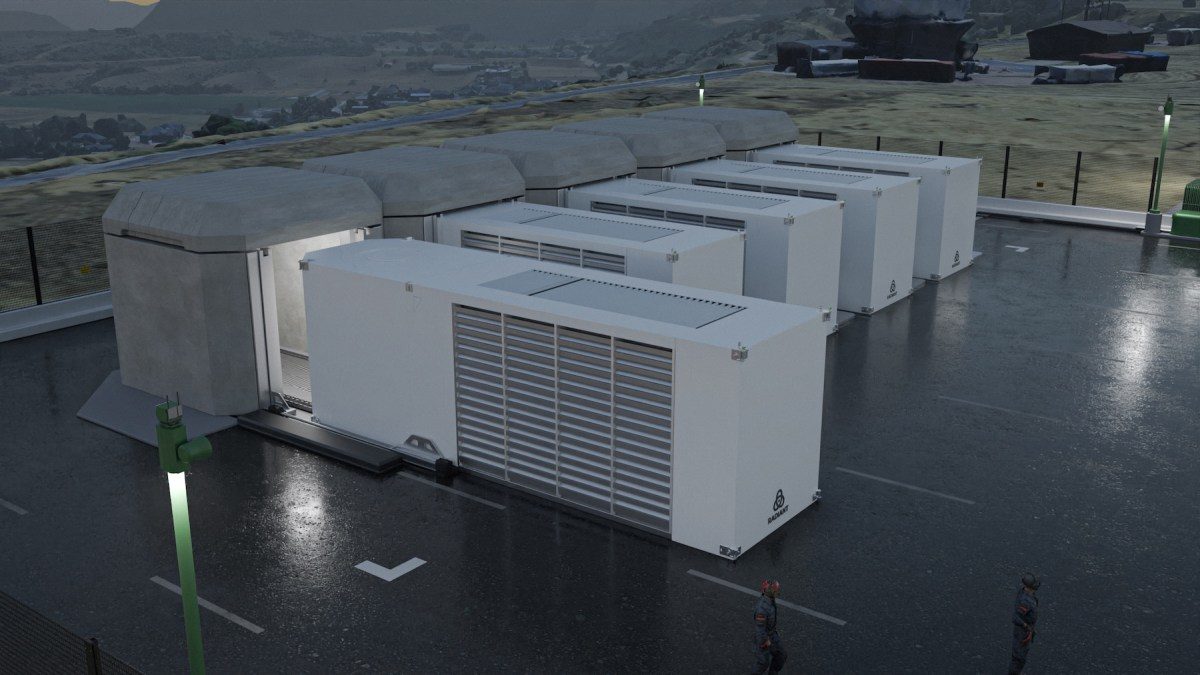
Radiant Nuclear has raised more than $300 million to accelerate development of its semi-transportable 1 megawatt microreactor, extending a rapid streak of nine-figure financings across the nuclear startup landscape as investors chase firm power for AI-era electricity demand.
The round was led by Draper Associates and Boost VC, with participation from Ark Venture Fund, Chevron Technology Ventures, Friends & Family Capital, Founders Fund, and other backers. The financing values Radiant Nuclear at more than $1.8 billion. Previous investors include Andreessen Horowitz, DCVC, Giant Ventures, and Union Square Ventures.
A rush of capital as data centers hunt for dependable power
Venture capital interest in nuclear has tracked closely with the data center boom, as hyperscalers and developers attempt to lock in long-term electricity supply amid rising load forecasts driven by AI and cloud growth. In recent months, multiple nuclear startups have announced large rounds, fueling debate over whether enthusiasm is turning into a bubble—or simply reflecting a market that is repricing the value of always-on, low-carbon power.
Investors backing the sector argue that nuclear fission offers a rare combination: high capacity factor, minimal land footprint compared with many renewables, and the potential for stable pricing via long-duration contracts. Skeptics counter that nuclear projects are notoriously difficult to permit, build, and scale, and that many venture-backed timelines assume a pace of deployment that the industry has historically struggled to achieve.
What Radiant is building: a 1MW reactor delivered by semi
Radiant Nuclear is developing a compact reactor designed to generate 1 megawatt of electricity—roughly enough to power a small industrial site or a portion of a data center’s load—packaged so it can be delivered by semi truck. The company’s design uses helium cooling and TRISO fuel, a form of nuclear fuel made from carbon- and ceramic-coated particles intended to improve containment and resilience under high temperatures.
The company says each unit would carry enough fuel to operate for about five years between refueling, with an expected service life of roughly 20 years. At end-of-life, the plan is for the company to retrieve the unit, a model aimed at simplifying operations for customers that do not want to manage long-term nuclear stewardship on-site.
Replacing diesel at the edge—and selling power like a service
A core target for Radiant Nuclear is the replacement of diesel generators at commercial and military locations where fuel logistics are expensive, risky, or carbon-intensive. The company expects to offer customers multiple commercial paths, including purchasing the unit outright or subscribing via a power purchase agreement (PPA)-style arrangement that bundles equipment, operations, and power delivery into a predictable fee.
This approach mirrors a broader shift in energy infrastructure toward service-based models, where customers prioritize uptime and cost certainty over owning complex assets. For nuclear startups, it also creates a potentially recurring revenue stream—if they can clear licensing hurdles and demonstrate reliable performance.
Data centers are a marquee customer—and a proving ground
Like many next-generation nuclear developers, Radiant Nuclear is targeting data centers as early customers. The company previously announced an agreement with Equinix, a major data center developer and operator, to supply 20 reactors. For the industry, deals like this serve as both market validation and a practical test of whether microreactors can integrate with mission-critical facilities that demand extremely high reliability.
Data center power procurement has become increasingly diversified as developers compete for grid capacity. Alongside traditional utility contracts, the market has seen interest in on-site generation, dedicated renewables paired with storage, and nuclear options ranging from conventional plants to small modular reactors (SMRs) and microreactors. The appeal is straightforward: AI workloads are pushing utilization higher, and power has become a gating factor for new builds.
The hard part: permitting, first builds, and scaling manufacturing
While fundraising momentum is strong, the sector’s biggest challenges remain execution and regulation. Nuclear projects face rigorous safety and security requirements, and many startups are attempting to compress development schedules in ways that will be difficult to sustain if engineering changes arise during licensing or first construction.
Another risk is the transition from a first-of-a-kind demonstration to repeatable production. Many venture-backed nuclear roadmaps assume that mass manufacturing will lower costs enough to compete with other sources of firm power. Building a prototype “by hand” can prove technical feasibility, but it does not guarantee that the design can be replicated quickly, affordably, and consistently—especially when supply chains, specialized materials, and quality assurance standards are involved.
- Licensing and oversight: navigating safety reviews, security requirements, and operational approvals.
- Construction reality: controlling cost and schedule on first deployments.
- Manufacturing scale-up: turning a prototype into a standardized product without quality drift.
- Customer adoption: proving reliability and economics versus grid power, gas, and storage.
What the $300M round signals for nuclear startups in 2026
The size of Radiant Nuclear’s raise underscores how capital is clustering around companies promising near-term deployments, especially those positioned as modular, transportable, and suited to high-value customers with urgent power needs. It also raises the pressure: with valuations rising and timelines tightening, investors will increasingly demand demonstrated progress toward a working reactor and a credible path to repeatable production.
For now, the financing places Radiant Nuclear among the best-capitalized entrants in the microreactor race, with a clear near-term narrative: build and prove a demonstration unit, convert early agreements into deliverable projects, and show that compact nuclear can compete where diesel and constrained grids are most expensive. Whether the current surge in nuclear funding marks a durable shift or a frothy cycle will depend less on pitch decks and more on steel, concrete, and regulatory milestones in the months ahead.