

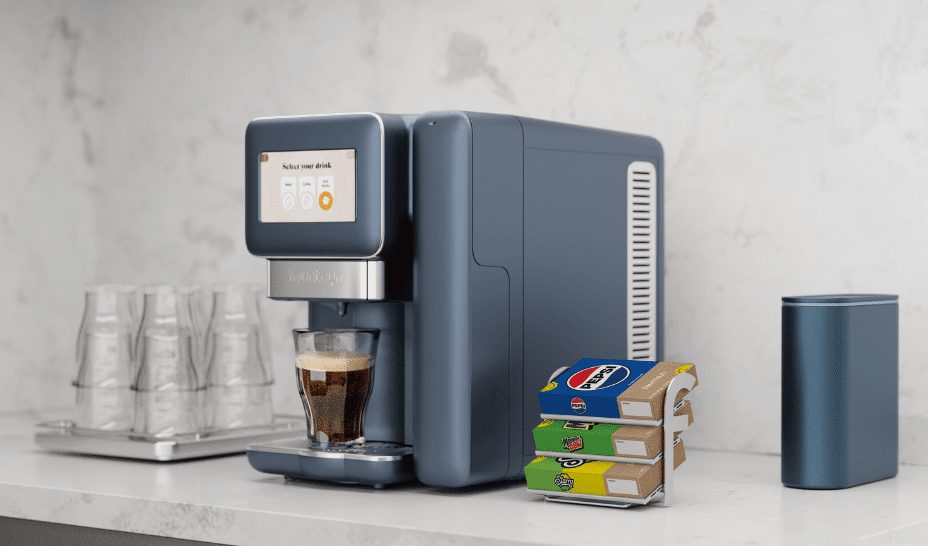
Dailyza has learned that Dutch beverage startup Founteyn has secured €19.3 million in funding, with a collaboration involving PepsiCo cited as a key commercial underpinning for the round. The deal highlights how strategic partnerships with global consumer giants can de-risk growth plans and unlock larger checks for early-stage companies operating in the competitive drinks market.
A funding round anchored by commercial validation
In European venture capital, investors increasingly look for evidence that a young brand can move beyond product-market fit into repeatable distribution, manufacturing reliability, and predictable demand. For beverage startups, those hurdles are steep: margins are pressured by ingredients, packaging, logistics, and retailer terms, while consumer tastes shift quickly and shelf space is expensive.
Founteyn’s €19.3 million raise stands out because the company can point to a collaboration with PepsiCo as more than a logo on a slide. Partnerships with established multinationals can provide access to procurement expertise, operational playbooks, and routes to market that would otherwise take years to build. For investors, this kind of relationship can reduce execution risk, particularly when scaling production and expanding geographically.
Why beverage investors care about partnerships
The European drinks category has become a battleground for both incumbents and insurgents. Consumers are buying more products positioned around wellness, functional benefits, and lower sugar, while regulators and public health advocates continue to scrutinize ingredients and labeling. In that environment, startups face a dual challenge: innovate fast enough to stand out, and scale responsibly enough to survive.
A collaboration with PepsiCo can signal that a startup has cleared demanding technical and commercial gates. Large beverage groups typically run extensive checks on quality systems, supply continuity, and brand safety before moving forward. That diligence effectively becomes a form of third-party validation, which can be persuasive during fundraising.
It also speaks to a broader trend: strategic relationships are increasingly intertwined with financing. Instead of waiting for an acquisition offer years down the line, startups may secure earlier commercial partnerships that strengthen unit economics and support expansion, while investors gain confidence that a credible path to scale exists.
What €19.3 million enables at a critical stage
For a beverage company, fresh capital is often less about flashy marketing and more about building durable infrastructure. A round of this size typically supports several high-cost priorities:
- Manufacturing scale-up: improving production capacity, process consistency, and quality control, including partnerships with co-packers or investments in dedicated lines.
- Distribution expansion: entering new retail accounts, foodservice channels, and e-commerce platforms while managing trade spend and promotional cycles.
- Supply chain resilience: securing ingredients and packaging, hedging against price volatility, and reducing lead times.
- Product development: extending ranges, testing new flavors or functional claims, and ensuring compliance across markets.
With a strategic collaborator in the picture, the company may also be able to accelerate learning cycles around pricing, packaging formats, and shopper behavior, areas where incumbents have extensive data and experience.
The strategic logic for PepsiCo
For PepsiCo, partnerships with emerging brands can serve multiple strategic purposes. They can help the company stay close to fast-moving consumer preferences, test new concepts with lower internal risk, and explore growth pockets that may not fit neatly into existing portfolios.
In beverages, where the fight for relevance is constant, collaborating with startups can also function as an innovation pipeline. Whether the relationship eventually deepens into broader commercialization, minority investment, or a longer-term strategic tie-up, early collaboration provides a front-row seat to what resonates with consumers and what fails in real market conditions.
Europe’s beverage market: growth meets hard economics
Despite strong consumer demand for new drink formats and healthier positioning, the sector remains unforgiving. Retailers expect dependable supply and consistent velocity, while marketing costs can balloon quickly. Meanwhile, the economics of bottled and canned products are sensitive to changes in commodities, energy, and freight.
That is why investors often favor startups that can show operational maturity early, including reliable manufacturing partners, disciplined gross margin management, and a credible plan for expansion that does not rely solely on paid advertising. A collaboration with PepsiCo suggests Founteyn is building with those realities in mind, strengthening the investment case.
What this signals for founders and investors
Founteyn’s raise underscores a clear message to European founders: strategic collaboration can be a fundraising catalyst when it is tied to tangible commercial progress. For investors, the deal reflects a continued appetite for consumer brands that can pair differentiated products with scalable operations, especially when a major industry player is willing to engage.
What to watch next
The key question now is execution: how efficiently Founteyn converts capital into expanded distribution, stronger margins, and repeatable demand. Observers will be watching for signs of accelerated market entry, new product launches, and operational improvements that typically follow a round of this size.
In a category where many promising beverage startups stall at the point of scale, the combination of €19.3 million in financing and a collaboration with PepsiCo positions Founteyn to attempt the hardest part of the journey: turning early momentum into a sustainable, widely available brand.