

Neura Robotics targets €1B war chest from Tether
German robotics startup Neura Robotics is reportedly preparing to raise up to €1 billion from Tether, the company behind the world’s largest US dollar-pegged stablecoin. The funding is expected to accelerate the development and mass production of AI-powered humanoid robots, a move that could significantly reshape both the robotics and digital asset industries.
AI humanoid “army” vision raises eyebrows
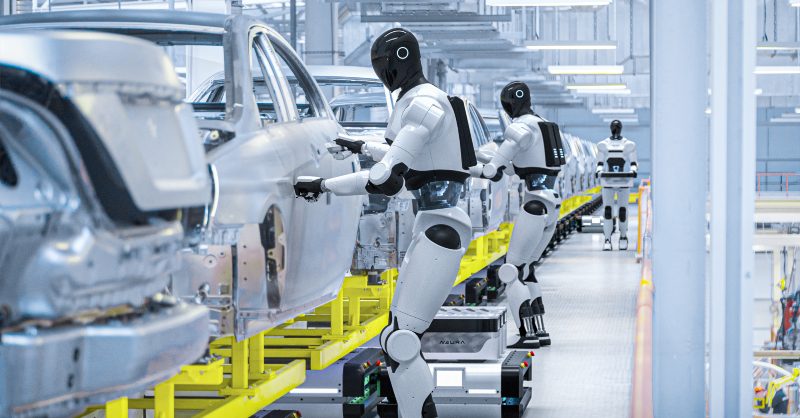
The deal, described in some reports as financing an “AI humanoid army,” underlines the scale of Neura Robotics’ ambitions. The company develops collaborative humanoid systems that combine computer vision, machine learning and advanced sensor fusion to operate safely alongside humans in factories, logistics centers and service environments.
While the term “army” is largely used for dramatic effect, the underlying strategy is clear: deploying thousands of intelligent humanoid units into industrial and commercial settings to automate repetitive, dangerous or highly precise tasks. This aligns with a broader global race to build scalable general-purpose robots capable of performing a wide variety of jobs.
Tether expands from stablecoins into hard tech
For Tether, a €1 billion commitment would mark one of its most aggressive moves beyond digital assets and into real-world deep-tech infrastructure. The company has previously signalled interest in AI infrastructure, data centers and Bitcoin mining, seeking to redeploy profits from its stablecoin business into high-growth technology plays.
Backing a European robotics manufacturer gives Tether exposure to the fast-growing market for automation and industry 4.0 solutions, while potentially diversifying its balance sheet with equity in a hard-tech company rather than purely financial assets.
Ethical, regulatory and labour questions ahead
The prospect of large-scale humanoid deployment is likely to attract scrutiny from regulators, labour unions and ethicists. Issues around workforce displacement, data privacy, algorithmic bias and potential dual-use applications will be central to public debate as humanoid systems become more capable and more autonomous.
European policymakers are already advancing frameworks such as the EU AI Act to govern high-risk AI systems. A sizeable capital injection into Neura Robotics could accelerate the timeline on which such robots move from pilot projects to mainstream deployment, putting additional pressure on regulators to clarify rules around safety, liability and human oversight.
If finalised, the €1 billion round would position Neura Robotics among the best-funded humanoid robotics companies globally, intensifying competition with US and Asian players pursuing similar visions of highly capable, general-purpose robotic workers.