

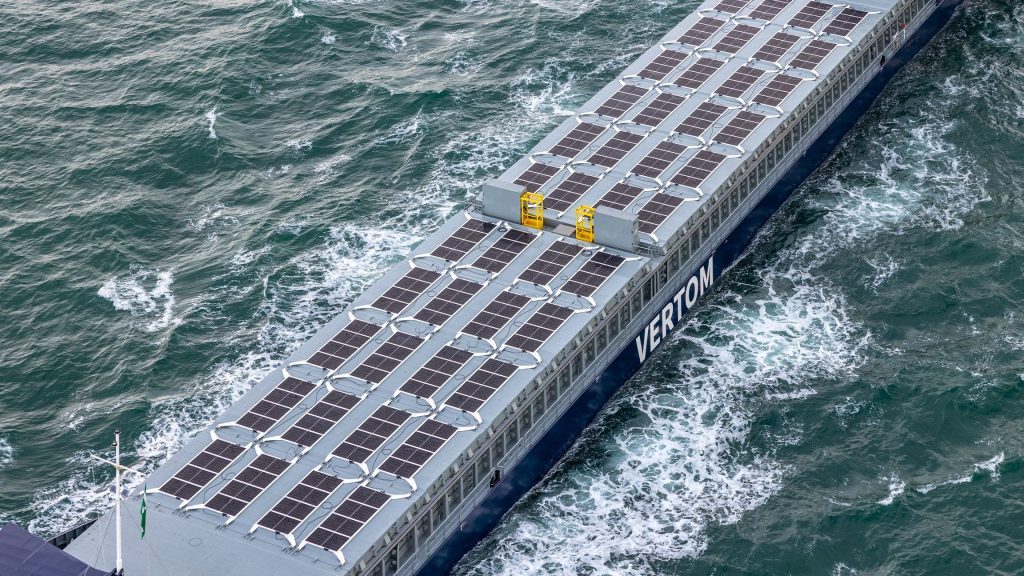
Wattlab targets shipping emissions with solar innovation
Dutch cleantech startup Wattlab is scaling up solar power for the maritime sector with its new Solar Flatrack, a modular solar solution engineered specifically for large bulk carriers. The system aims to help shipowners cut fuel consumption, reduce emissions and comply with tightening global regulations on maritime pollution.
How Solar Flatrack works on bulk carriers
The Solar Flatrack is a prefabricated, container-sized unit that integrates high-efficiency solar panels, mounting structures and power electronics into a single plug-and-play platform. It is designed to be installed on the deck of bulk carriers without major structural modifications, allowing ship operators to add renewable generation capacity during regular port calls or maintenance windows.
By feeding electricity directly into the vessel’s onboard systems, the technology can offset part of the power normally supplied by diesel generators. This reduces fuel consumption, lowers operational costs and cuts CO₂ emissions, while also decreasing noise and vibration associated with conventional auxiliary engines.
Decarbonizing a hard-to-abate sector
The global shipping industry faces mounting pressure from the International Maritime Organization and regional regulators to decarbonize. Bulk carriers, which move commodities such as iron ore, coal and grain, are among the largest fuel consumers in commercial shipping. Solutions that can be retrofitted onto existing fleets are therefore in high demand.
By focusing on a standardized, scalable design, Wattlab positions Solar Flatrack as a practical bridge technology on the road to zero-emission shipping. The system can be combined with other efficiency measures, such as route optimization software, improved hull coatings and alternative fuels, to amplify overall impact.
Commercial rollout and industry interest
Wattlab is now moving from pilot projects to broader commercial deployment, working with shipowners and operators that manage large bulk carrier fleets. Early trials are expected to focus on high-sunlight routes where the performance of marine solar power systems is most favorable.
As investors and regulators push for measurable progress on maritime decarbonization, solutions like Solar Flatrack could become a key component of sustainability strategies across the global bulk shipping segment.