

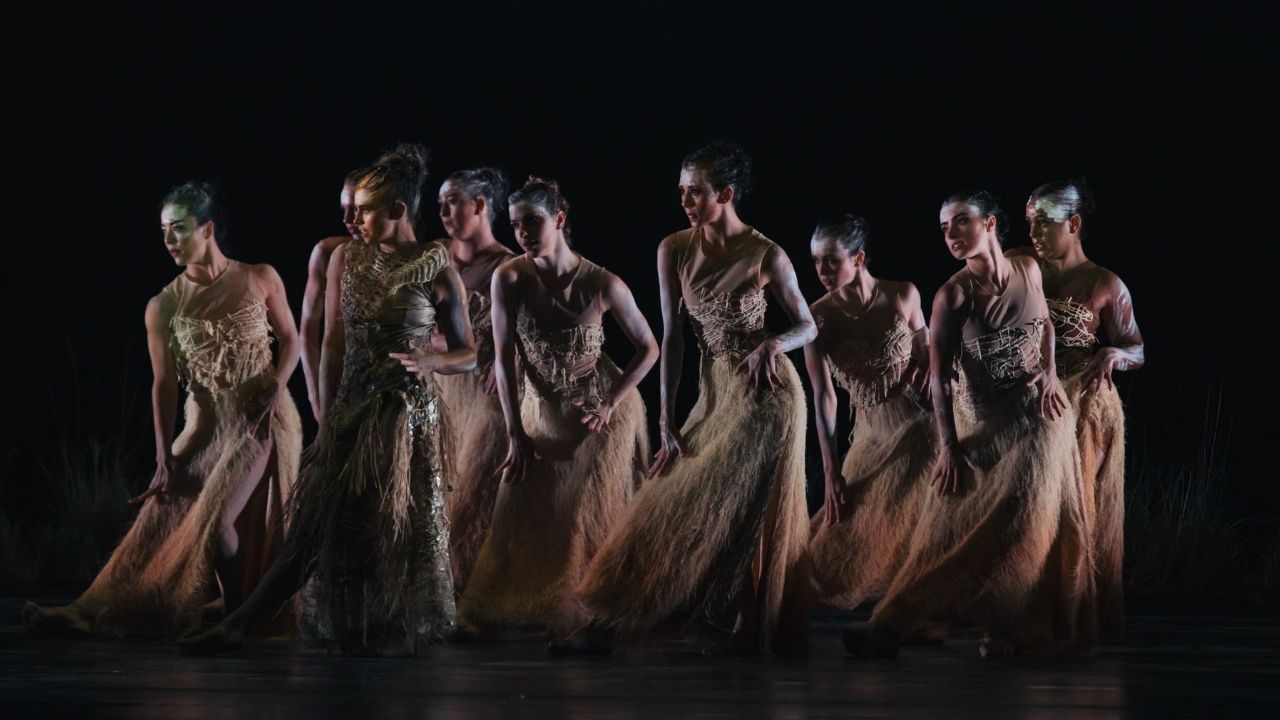
The Australian Ballet and Bangarra Dance Theatre unite to present Flora, a stage performance exploring the vital bond linking nature to Indigenous cultural heritage.
The highly anticipated production known as Flora represents a significant collaborative effort between the Australian Ballet and the Bangarra Dance Theatre. Scheduled to make its global debut in Melbourne this March, the performance is the first full-length joint production from the two prominent arts organizations. The choreographic work explores the historical and environmental evolution of local plant life, merging classical techniques with movement vocabularies developed over tens of thousands of years.
The narrative centers on the deep reliance and understanding that First Nations communities have regarding their natural surroundings. Frances Rings, a Mirning individual who serves as the artistic director and co-chief executive officer of the Bangarra Dance Theatre, explained that plants serve as much more than basic sustenance or shelter. She noted that flora acts as a complex language that indicates seasonal transitions and fosters a deep connection to the regional landscape. According to her perspective, this botanical foundation has guided the spiritual and practical identity of her people for millennia.
A Fusion of Musical and Visual Artistry
The auditory landscape of the production features an original composition by William Barton, a respected Kalkadunga musician widely recognized for his ability to merge traditional Indigenous sounds with European classical frameworks. Audiences in Melbourne will hear the score performed live by Orchestra Victoria, while the Opera Australia Orchestra will provide the musical accompaniment during the Sydney run. William Barton expressed that the integration of these musical styles is intended to emphasize the unique history of Australia, projecting a sense of unity among the performers and the broader community.
Visual aesthetics play an equally crucial role in grounding the performance in its natural themes. Elizabeth Gadsby, responsible for the set design, utilizes materials such as clay and simulates weather patterns like rain and fire to dynamically alter the stage environment. Complementing the set, acclaimed Meriam Samsep designer Grace Lillian Lee has created sculptural costumes that mimic the structures of ancient vines and leafy canopies, tightly integrating the human form with botanical imagery.
A Historic Organizational Relationship
While the current project marks a distinct milestone, the relationship between the two dance companies spans nearly three decades. The Australian Ballet artistic director, David Hallberg, characterized the current effort as a positive illustration of what can be achieved when artists unite under a shared environmental focus. The history of their partnership traces back to the late nineteen-nineties with a production titled Rites, originally choreographed by Stephen Page, the former artistic director of the Bangarra Dance Theatre. Frances Rings was a performing dancer during that initial collaboration and recently observed that each new generation of artists introduces a distinct, urgent method of physical expression. She indicated that this evolving energy brings a fresh sense of immediacy to the stage.
Promoting Environmental Stewardship
Beyond the artistic achievements, the performance conveys a strong message regarding ecological awareness. Frances Rings highlighted that the timing of the production aligns with pressing global concerns about environmental degradation and the ongoing neglect of traditional land management practices. She suggested that the show serves as an open invitation for audiences to reflect on their own environmental impact, stressing that the responsibility to care for the land is a universal obligation. The production will initially run at the Regent Theatre located in Melbourne from the twelfth to the twenty-first of March, followed by a series of performances at the Sydney Opera House from the seventh to the eighteenth of April.