

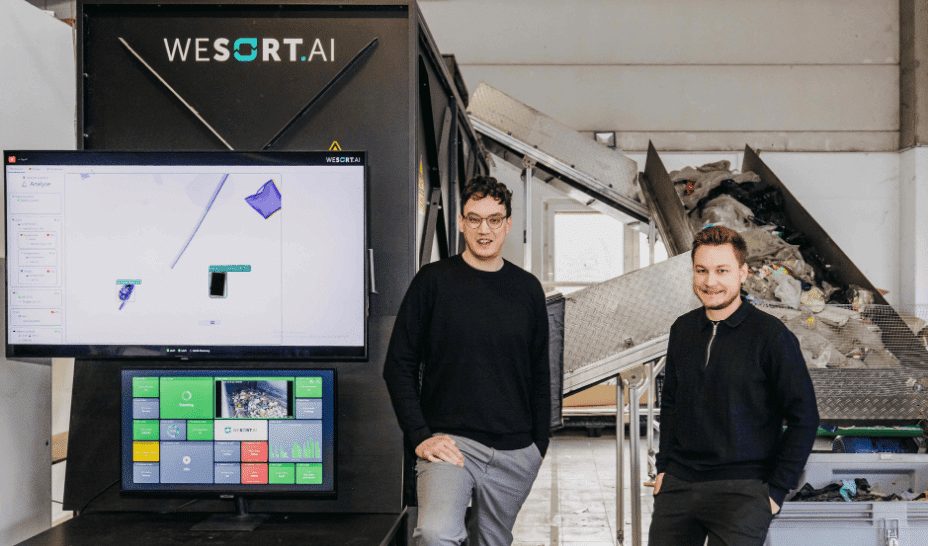
WeSort.AI raises fresh capital to tackle Europe’s raw material dependency
German startup WeSort.AI has secured a €10 million funding round to scale its technology for extracting critical raw materials from industrial and municipal waste streams. The investment comes as Europe faces mounting pressure to reduce its reliance on imported metals and minerals essential for batteries, electric vehicles and renewable energy infrastructure.
With the EU heavily dependent on foreign suppliers for key inputs such as rare earths, cobalt and lithium, policymakers are pushing for a more resilient and sustainable supply chain. WeSort.AI aims to position itself at the heart of this shift by turning discarded materials into a strategic resource.
AI-powered sorting to recover valuable materials
The company’s core solution combines AI algorithms, computer vision and advanced sensor-based sorting to identify and separate high-value fractions from mixed waste. Operating at industrial scale, the system can detect specific alloys, metals and composite materials that are typically lost in conventional recycling processes.
By improving the precision of sorting, WeSort.AI enables recyclers and manufacturers to recover more usable material from each tonne of waste. This not only increases the economic value of recycling, but also reduces the need for environmentally damaging mining and long-distance imports.
Supporting Europe’s circular economy ambitions
The €10 million injection will be used to expand deployment of the technology at major recycling facilities, enhance the underlying machine learning models and grow the company’s engineering and commercial teams. The startup plans to deepen partnerships with waste management firms, battery recyclers and metal producers across Europe.
For EU industry, the rise of solutions like WeSort.AI is closely aligned with the bloc’s Critical Raw Materials Act and broader circular economy agenda, which seek to boost domestic sourcing, recycling and reuse of strategic materials. Recovering metals from existing waste streams is seen as one of the fastest and most sustainable ways to strengthen supply security while cutting carbon emissions.
As demand for green technologies accelerates, the ability to “mine” landfills and scrap yards using intelligent sorting systems could become a key competitive advantage for Europe’s manufacturing base.