

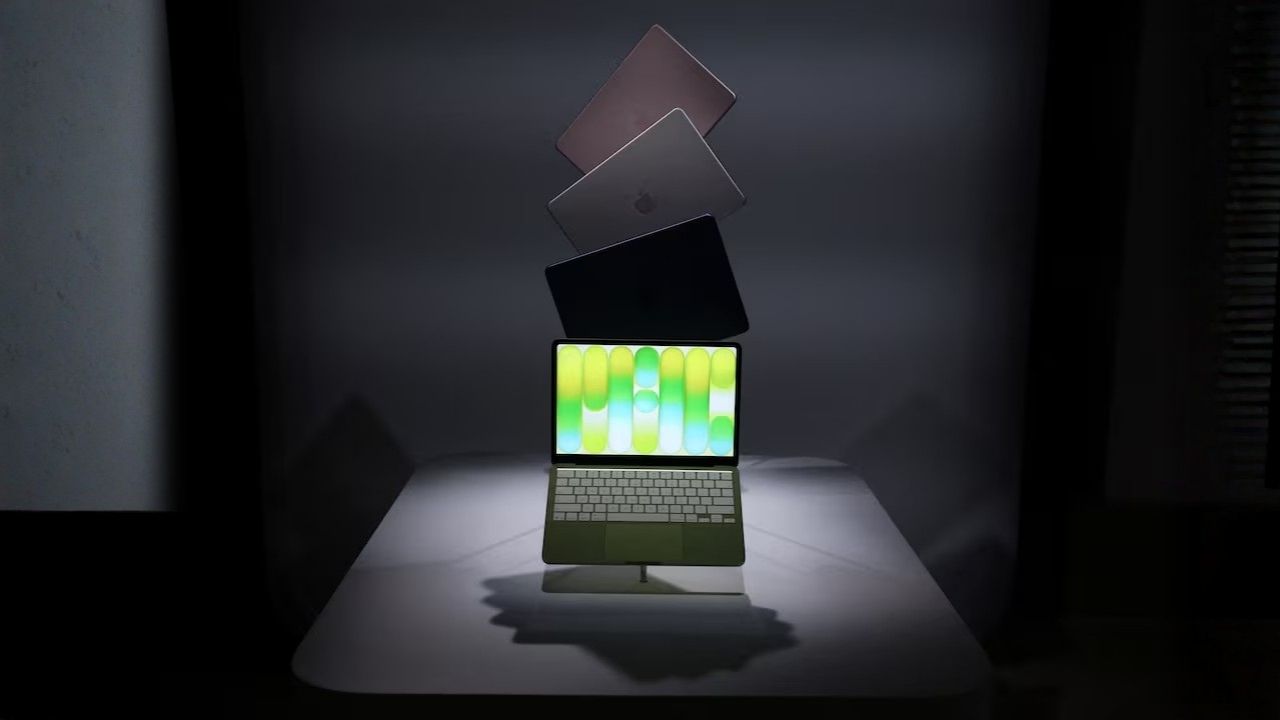
CUPERTINO — The recently introduced MacBook Neo from Apple continues to generate significant discussions among hardware analysts. Recent diagnostic evaluations indicate that the entry-level laptop achieves remarkable processing metrics, specifically when compared to legacy professional workstation hardware. Utilizing the proprietary A18 Pro silicon, the budget-oriented machine recently recorded a single-core score on the Geekbench testing platform that effectively triples the output of an older, highly expensive desktop counterpart.
Diagnostic data confirms that the lightweight laptop scored 3,461 in single-core operations, massively overshadowing the 1,353 single-core score produced by a late-2019 Mac Pro equipped with an Intel Xeon W processor. Market observers noted that the desktop workstation originally retailed for approximately thirteen thousand dollars, making the performance of the five hundred and ninety-nine dollar portable device particularly notable.
The Architectural Bottleneck
Despite these impressive numerical achievements, hardware experts caution consumers against viewing this as an absolute performance victory. The primary limitation of this comparison involves architectural design and modern software utilization. The vast majority of contemporary professional applications are heavily multi-threaded, meaning they rely on multiple processing cores working simultaneously. In multi-core evaluations, the older workstation maintains a distinct structural advantage.
Furthermore, the MacBook Neo ships with a strict baseline of eight gigabytes of unified memory. System analysts point out that for intensive computational tasks where high single-core velocity is actually beneficial, this restricted memory capacity would quickly act as a severe operational bottleneck. This limitation prevents the processor from maintaining sustained peak performance during heavy workloads. Therefore, while the diagnostic scores provide excellent marketing material showcasing the rapid evolution of Apple engineering over older Intel and AMD architectures, they hold limited practical value for heavy industrial rendering or compiling.
Hardware Specifications and Physical Compromises
The new portable computer marks a distinct strategy for the technology corporation. It features a thirteen-inch Liquid Retina display outputting a resolution of 2,408 by 1,506 pixels at five hundred nits of brightness. Additional hardware inclusions comprise uniform display borders, a Touch ID biometric sensor, dual-firing speakers compatible with Spatial Audio, and a high-definition front-facing camera. The chassis is constructed from brightly colored aluminum, paired with a color-matched keyboard assembly to maintain a premium aesthetic.
To achieve the aggressive entry-level pricing, the manufacturer implemented several notable physical compromises. The device incorporates a heavily binned version of the A18 Pro processor and features a simplified trackpad mechanism that completely lacks pressure sensitivity and haptic feedback capabilities. Connectivity is restricted to two USB-C ports that possess entirely different data transfer characteristics, requiring users to physically test peripherals to determine optimal connection speeds.
Market Availability and Purchasing Decisions
Retail distribution networks are actively preparing for the official consumer launch. The global e-commerce platform Amazon is currently accepting advance reservations for the device. The foundational configuration featuring two hundred and fifty-six gigabytes of internal storage is priced at five hundred and ninety-nine dollars. A secondary variant offering five hundred and twelve gigabytes of solid-state storage is available for six hundred and ninety-nine dollars.
Technology advisors suggest that prospective buyers carefully evaluate their daily computational requirements before purchasing. While the device offers a forty-three percent performance increase over the older M1 MacBook Air, consumers must weigh the physical limitations against their specific workflow needs. Industry reviewers encourage shoppers to compare this entry-level machine directly against the newly released M5 MacBook Air to determine which hardware profile best aligns with their professional or educational demands.