

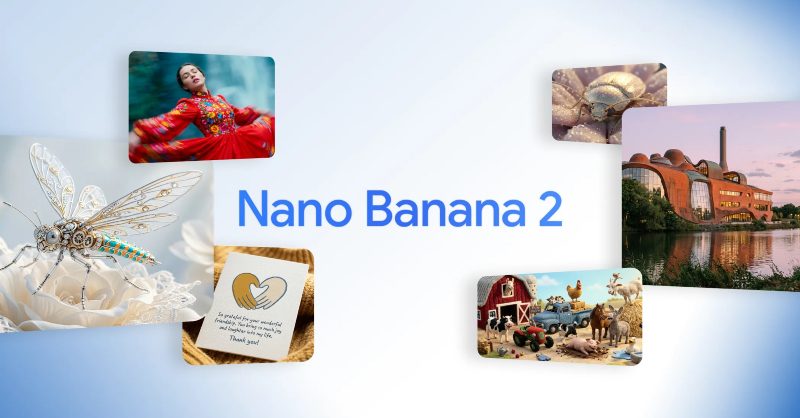
Nano Banana 2 debuts as Gemini’s speed-focused image model
The new Nano Banana 2 model is rolling out as part of Google Gemini, positioned as one of the company’s fastest image-generation and image-understanding models to date. Designed as a compact, on-device system, Nano Banana 2 targets developers and product teams that need rapid visual processing without the overhead of large cloud models.
What Nano Banana 2 is designed to do
Within the broader Gemini family, which spans from small on-device models to large-scale cloud deployments, Nano Banana 2 occupies the ultra-lightweight tier. Its architecture is tuned for quick tasks such as real-time image recognition, fast image captioning, and low-latency visual search on mobile and embedded devices.
By focusing on efficiency, the model aims to reduce inference latency and power consumption, making it suitable for applications like camera-based assistants, AR overlays, and privacy-sensitive workflows where images never need to leave the device.
Is it Gemini’s fastest image model?
According to early technical positioning, Nano Banana 2 is expected to be the fastest image-capable model in the Gemini stack for on-device use, trading some raw generative power for speed and responsiveness. While larger cloud-hosted AI models in the Gemini family still lead in overall accuracy and multi-modal reasoning, they rely on server-side computation and network connectivity.
For developers, the key question is not only speed but also the balance between model size, throughput, and image quality. Nano Banana 2 is optimized for scenarios where milliseconds matter more than ultra-high fidelity, such as instant product recognition in retail apps or live content moderation in social platforms.
What this means for developers and users
The release of Nano Banana 2 signals a continued push by Google toward practical, edge-ready AI algorithms. Developers can expect tighter integration with Android, improved tooling for on-device deployment, and more granular choices across the Gemini lineup, from compact models like Nano Banana 2 to full-scale cloud offerings.
For end users, the impact will likely appear as faster camera apps, more responsive visual assistants, and AI features that work reliably even with limited connectivity, underscoring a broader industry shift toward powerful yet efficient on-device intelligence.