Close Menu
Dailyza | Tech, Investments, Business & World News
  • Startups
  • Venture Capital
  • World
  • Economy
  • Politics
  • Science
  • Technology
  • Travel
  • Culture
Facebook X (Twitter) Instagram
Trending
  • Quobly Secures €115 Million to Advance Silicon-Based Quantum Computing
  • Dailyza: Munich’s Encosa Revolutionizes Energy Storage
  • Bayshore Unveils Innovative AI Platform for Legal Compliance
  • Factorial Secures €129 Million in Series D Funding Round
  • Dailyza Explores the European Tech Ecosystem’s Series B Dilemma
  • INXM Secures €5.7 Million for AI Solutions in Enterprise Operations
  • PLD Space Secures €35 Million Investment to Advance Space Tech
  • Factorial Secures $150M Series D, Valuation Hits $2.5B
Dailyza | Tech, Investments, Business & World NewsDailyza | Tech, Investments, Business & World News
Thursday, June 4
  • Startups
  • Venture Capital
  • World
  • Economy
  • Politics
  • Science
  • Technology
  • Travel
  • Culture
Dailyza | Tech, Investments, Business & World News
Home»Technology
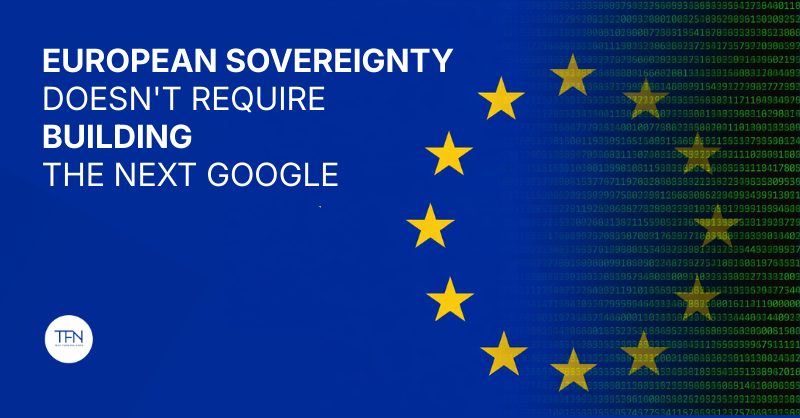
Abstract representation of European digital infrastructure and technology sovereignty

European Tech Sovereignty Doesn’t Mean Cloning Google

20 February 2026 Technology No Comments2 Mins Read
Share
Facebook Twitter LinkedIn Pinterest Email

Europe Rethinks What Tech Sovereignty Really Means

Debates around European tech sovereignty have often been framed as a race to build the continent’s own version of Google, Amazon or other US and Chinese giants. Policy experts and industry leaders now argue that this narrative is misleading – and that sovereignty is less about replicating Big Tech and more about controlling critical infrastructure, standards and data flows.

From Building Champions to Shaping the Rules

Instead of trying to engineer a single European “super platform”, Brussels is increasingly focused on regulatory power and strategic capabilities. Through measures such as the Digital Markets Act, the Digital Services Act and the proposed AI Act, the European Union is positioning itself as a global rule‑setter for digital markets, content moderation and AI algorithms.

Analysts note that this approach allows Europe to exert influence over global tech firms operating within its borders, even if those firms are headquartered elsewhere. By defining strict rules on data protection, competition and transparency, the EU seeks to protect citizens, support smaller innovators and avoid lock‑in to any single foreign ecosystem.

Strategic Autonomy Through Infrastructure and Open Technologies

Beyond regulation, sovereignty discussions now centre on ownership and control of key layers of the digital stack. This includes cloud infrastructure, semiconductors, 5G networks, and trusted identity and payment systems. Initiatives such as Gaia‑X and national cloud frameworks aim to ensure that sensitive European data can be stored and processed under European jurisdiction and standards.

Experts stress that open, interoperable technologies are crucial. Rather than building closed, vertically integrated platforms, Europe is investing in open source software, shared data spaces and cross‑border digital services that enable many companies to compete and collaborate. This ecosystem approach is seen as more realistic than trying to replicate the scale and data advantages of US tech giants.

A Sovereign Digital Future Without a European Google

For policymakers, the goal is not symbolic prestige but resilience, security and economic competitiveness. A sovereign European digital space can exist even if search, social media or app stores are run by non‑European firms, provided that Europe retains the ability to enforce its laws, protect its citizens’ privacy and maintain alternatives in critical technologies.

As the debate evolves, the emerging consensus is clear: European tech sovereignty will be defined less by creating a new Google and more by building a robust framework of rules, infrastructure and innovation capacity that ensures long‑term autonomy.

Previous ArticleDavid Silver Leaves Google to Build RL Superintelligence
Next Article FYLD secures $41M to scale AI for global megaprojects
Kyle Kelley
  • Website

Keep Reading

Quobly Secures €115 Million to Advance Silicon-Based Quantum Computing

Dailyza: Munich’s Encosa Revolutionizes Energy Storage

Bayshore Unveils Innovative AI Platform for Legal Compliance

INXM Secures €5.7 Million for AI Solutions in Enterprise Operations

PLD Space Secures €35 Million Investment to Advance Space Tech

Circular11 Secures €2.7 Million to Transform Plastic Waste

Add A Comment

Leave A Reply Cancel Reply

Factorial Secures €129 Million in Series D Funding Round

Venture Capital 4 June 2026

Factorial announces a €129 million funding boost, elevating its valuation significantly in the HRTech sector.

Dailyza Explores the European Tech Ecosystem’s Series B Dilemma

Factorial Secures $150M Series D, Valuation Hits $2.5B

Dailyza: Key Questions to Consider Before Choosing a Co-Founder

Dailyza Secures $150M for AI Infrastructure After Carbon Removal Setback

Michele Griffin Joins Lightning Capital to Lead $100M AI Fund

Dailyza: European Startups Surge in $226B Secondary Market Boom

Tomorrow.Bio’s Dr Emil Kendziorra Discusses Future of Biotech

Corgi’s Valuation Soars to $2.6B Following $106M Investment

Dailyza: European Startups Secure Significant Funding in May

Native Teams’ CMO Discusses Global Hiring Costs and Strategies

Transition Ventures’ David Helgason Raises $150M for AI Infrastructure

Dailyza: Bias in AI Tools Raises Concerns for Female Founders

Airbnb Invests €49 Million in WeRoad’s Adventure Travel Expansion

Dailyza: 10 TravelTech Startups Revolutionizing Journeys in 2026

Dailyza | Tech, Investments, Business & World News
  • Startups
  • Contact
  • About Us
© 2026 Dailyza

Type above and press Enter to search. Press Esc to cancel.