

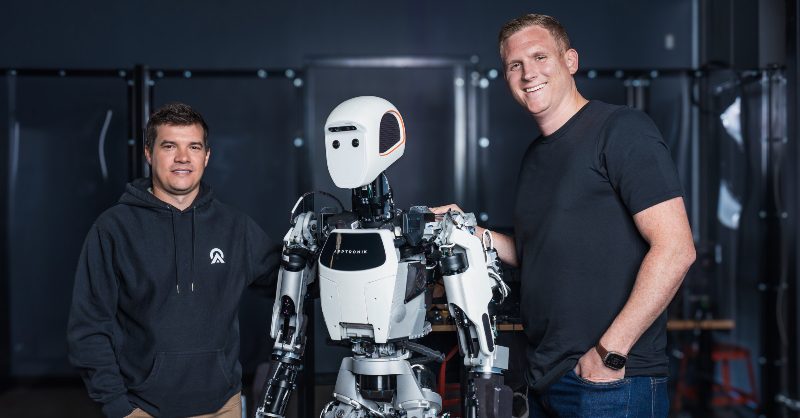
Apptronik Raises $520M to Accelerate Apollo Humanoid Robots
US robotics company Apptronik has secured a massive $520 million funding round to scale production of its flagship humanoid robot, Apollo, pushing its total capital raised close to the $1 billion mark. The deal underscores growing investor conviction that humanoid robots are nearing commercial readiness for use in factories, warehouses and logistics hubs.
Apollo Targets Labor-Intensive Industries
Apollo is designed as a general-purpose humanoid robot capable of handling repetitive and physically demanding tasks traditionally performed by human workers. Standing at human height and built to operate safely alongside people, Apollo can lift, carry and manipulate objects, making it suitable for manufacturing, e-commerce logistics and industrial automation.
The new funding will be channeled into expanding engineering teams, building out manufacturing capacity and accelerating pilot deployments with large enterprise customers. By focusing on real-world use cases rather than research-only prototypes, Apptronik aims to shorten the path from lab demonstrations to scalable commercial deployments.
Rising Competition in Humanoid Robotics
The deal positions Apptronik among the most heavily funded players in the emerging humanoid field, alongside companies developing systems comparable to Tesla’s Optimus and Figure’s humanoid platform. Investors are betting that advances in AI algorithms, computer vision and electric actuators will make multi-purpose robots economically viable for a broad range of tasks.
Analysts note that the nearly $1 billion capital bet on Apptronik reflects a wider trend: technology and industrial investors are shifting their attention from purely digital software to physical automation that can address chronic labor shortages and rising wage pressures.
Path to Commercial Scale
With this new war chest, Apptronik plans to move from small-scale pilots to structured rollouts, focusing first on controlled environments such as warehouses and assembly lines. The company is expected to invest heavily in safety certifications, reliability testing and human-robot interaction research to ensure Apollo can integrate into existing workflows without disrupting operations.
If Apollo proves cost-effective at scale, humanoid robots could transition from futuristic concept to standard industrial equipment, reshaping how physical work is performed in the global economy.