

What startup founders really earn in 2026
Fresh 2026 data on founder compensation sheds light on what startup leaders actually pay themselves in Europe compared with the United States. While mythology still paints founders as either broke visionaries or overnight millionaires, the reality is a structured, benchmark-driven salary market shaped by region, funding stage and sector.
Europe vs US: widening pay gap
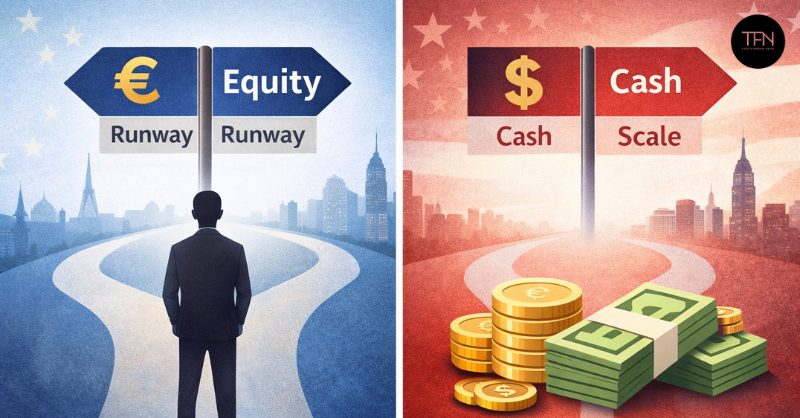
Across comparable stages, founders in the US consistently report higher cash compensation than their peers in Europe. Seed-stage European founders typically keep salaries modest to extend runway, while American founders more often adopt compensation levels closer to traditional tech executives.
Several factors drive this divide: deeper venture capital pools in the US, higher local cost of living in major hubs, and more aggressive expectations around full-time commitment and rapid scaling. European founders, by contrast, often balance leaner salaries with stronger social safety nets and a greater emphasis on equity ownership.
Stage, runway and investor expectations
Founder pay in both regions is now closely tied to company stage and cash runway. At pre-seed and seed, many founders either take minimal salaries or cap pay at a level that preserves at least 18–24 months of runway. By Series A and beyond, investors increasingly expect structured compensation frameworks that align with market benchmarks.
VC partners are also paying closer attention to how founder salaries evolve after large rounds. Overly aggressive pay rises are viewed as a red flag, while underpaying founders can raise concerns about burnout and retention.
Equity, cost of living and transparency trends
In both Europe and the US, founders still rely heavily on equity as the primary wealth-creation mechanism. However, 2026 data shows a growing push for transparent pay bands, especially in competitive hubs like Berlin, London, San Francisco and New York.
As macroeconomic conditions remain uncertain, founders are under pressure to justify every euro and dollar of salary. The emerging norm: sustainable, benchmarked pay that reflects local costs, balanced with meaningful ownership and a clear path to long-term upside.