

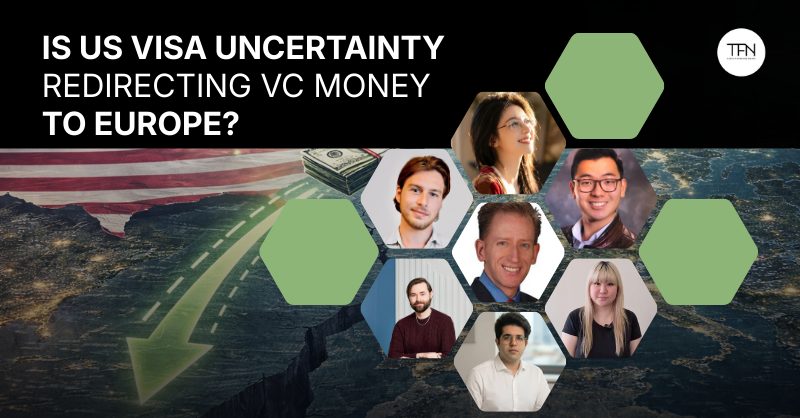
US Visa Uncertainty Puts Pressure on Early-Stage VC
Growing uncertainty around US visa policies is forcing global founders and investors to rethink where they build and fund the next generation of startups. While the United States remains the world’s largest venture market, early-stage capital is increasingly scanning Europe as a more predictable base for talent-heavy companies.
Founders Caught Between Talent Needs and Immigration Risk
For early-stage startups, the ability to hire and relocate top international talent is critical. Yet founders report that obtaining and renewing visas such as the H‑1B, O‑1 and startup-related categories has become slower, costlier and less predictable. This creates direct execution risk for seed and Series A companies whose value depends on specialist engineers and product leaders.
Some investors say they now discount US-only startups that rely heavily on immigrant founders or key staff, because a single rejected petition can derail product roadmaps and fundraising timelines. As a result, term sheets increasingly include questions about immigration exposure and contingency planning.
Europe Positions Itself as a Stable Alternative
At the same time, several European countries are marketing themselves as founder-friendly jurisdictions. Nations including the UK, France, Germany, the Netherlands and Portugal have introduced or expanded startup visas, digital nomad permits and fast-track schemes for highly skilled workers.
European VC funds argue that this relative policy stability, combined with deep technical universities and more competitive salary levels, makes the region attractive for building engineering hubs. Some US-based funds are now backing companies that keep a commercial presence in the US while placing core R&D teams in Europe to de-risk immigration and lower burn.
Capital Flows Are Adjusting, Not Abandoning the US
Industry analysts caution that this is not an exodus from the United States. The US still offers unmatched late-stage capital, scale of the domestic market and concentration of experienced operators. However, for the earliest stages—where headcount is small and every hire matters—visa uncertainty is pushing more investors to support hybrid or Europe-first company structures.
For now, the trend is subtle rather than seismic: diversified global portfolios, distributed teams and dual headquarters are becoming the default. If US immigration volatility persists, Europe’s reputation as a safer operational base for globally ambitious startups is likely to strengthen, drawing a larger share of early-stage venture checks.