

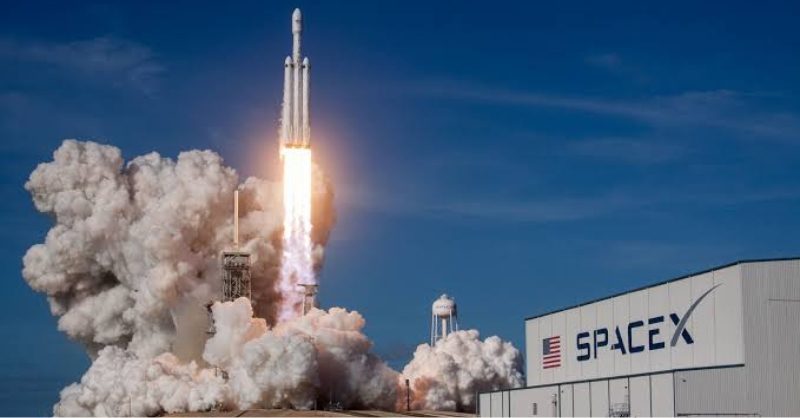
SpaceX lines up Wall Street heavyweights for mega IPO
SpaceX, the privately held space exploration and satellite communications company founded by Elon Musk, has reportedly selected a group of top-tier Wall Street banks to lead preparations for a potential initial public offering that could value the company at more than $350 billion.
According to people familiar with the matter, the company has tapped Bank of America (BofA), Goldman Sachs, JPMorgan and Morgan Stanley as key underwriters for what would be one of the largest and most closely watched listings in global markets.
While SpaceX has not yet filed a formal registration statement and the timing of the offering could still shift, the move to mandate leading global investment banks signals that the company is actively laying the groundwork for a public-market debut.
A potential $350B-plus valuation reshapes public markets
If the reported valuation range holds, a SpaceX IPO would rank among the most valuable listings in history and instantly create one of the largest publicly traded aerospace and communications companies.
The mooted valuation of more than $350 billion reflects investor enthusiasm for several core pillars of the business:
- The rapid growth of the Starlink satellite broadband network
- The dominance of Falcon 9 and Falcon Heavy in the global launch market
- The long-term potential of the fully reusable Starship system
- Strategic contracts with NASA, commercial operators and government customers
Such a valuation would place SpaceX in the upper tier of publicly listed U.S. companies by market capitalization, on par with established technology and industrial giants. It would also deepen the intersection between the public equity markets and the fast-expanding commercial space industry.
Why these banks matter: BofA, Goldman, JPM, Morgan Stanley
The selection of Bank of America, Goldman Sachs, JPMorgan and Morgan Stanley underscores the scale and complexity of a potential offering of this magnitude.
Capital markets firepower
All four institutions are among the most active global coordinators of large-cap equity offerings and technology IPOs. Their roles would typically include:
- Structuring the offering and advising on optimal capital structure
- Running extensive investor education and roadshows
- Building and managing the order book across institutional and retail investors
- Helping stabilize trading in the early days after listing
Sector and client relationships
Morgan Stanley and Goldman Sachs in particular have long-standing research and investment banking coverage of the aerospace, defense and telecommunications sectors. Their involvement will be key in positioning SpaceX not merely as a launch provider, but as a diversified space infrastructure and connectivity platform.
JPMorgan and Bank of America bring deep relationships with global institutional investors, sovereign wealth funds and large asset managers, which will be essential to placing a multi-billion-dollar transaction at a premium valuation.
Starlink and recurring revenue at the heart of the story
While SpaceX first captured global attention for its reusable rockets, investors are increasingly focused on the company’s Starlink business as the cornerstone of its long-term valuation.
A global satellite broadband network
Starlink operates a rapidly growing constellation of low-Earth-orbit satellites designed to deliver high-speed satellite internet to households, enterprises, governments and mobile platforms such as ships and aircraft. The service aims to combine global reach with performance that rivals terrestrial broadband.
For public-market investors, Starlink offers:
- Large and expanding addressable markets in underserved and remote regions
- Subscription-based, recurring revenue streams
- Opportunities in defense communications, maritime connectivity and aviation
Analysts have suggested that, over time, Starlink could account for the majority of SpaceX’s revenues and a substantial share of its profits, underpinning the lofty valuation expectations associated with a public listing.
From launch dominance to deep-space ambitions
Beyond communications, SpaceX has reshaped the global launch services market and is central to U.S. ambitions in space exploration.
Commercial and government launch leader
The company’s Falcon 9 and Falcon Heavy rockets have become workhorses for commercial satellite operators, national space agencies and defense customers. High launch cadence and partial reusability have driven down costs, strengthening SpaceX’s competitive position versus traditional aerospace incumbents.
The firm also holds key NASA contracts, including missions to resupply the International Space Station and crewed flights under the Commercial Crew Program. These partnerships provide both revenue and strategic validation.
Starship and multi-planetary plans
The next-generation Starship system is designed for full reusability and dramatically higher payload capacity, with applications ranging from lunar missions to eventual human travel to Mars. Although still in development and testing, Starship represents a central part of Elon Musk’s vision to make humanity a multi-planetary species.
Public investors will be watching closely how the company frames the balance between near-term cash-generating businesses such as Starlink and longer-horizon, capital-intensive projects tied to deep-space exploration.
What an IPO could mean for investors and the space sector
A SpaceX IPO would mark a pivotal moment for the broader space economy, which spans launch, satellites, earth observation, communications, navigation and emerging in-orbit services.
Benchmark for space valuations
As one of the most advanced and vertically integrated players in the sector, SpaceX would instantly become a benchmark for valuing both established aerospace firms and younger space-tech startups. Its trading multiples on metrics such as revenue growth, EBITDA and free cash flow would shape investor expectations across the ecosystem.
Retail access to a previously private giant
To date, exposure to SpaceX has largely been limited to venture capital funds, private equity, select institutional investors and employees. A public listing would open access to a much broader base of retail and institutional shareholders eager to participate in the company’s growth story.
At the same time, market participants will scrutinize risks including high capital expenditure, regulatory oversight in multiple jurisdictions, geopolitical sensitivities around dual-use technologies and the competitive response from rivals in launch and satellite communications.
Next steps: timeline and market conditions
Although the appointment of BofA, Goldman Sachs, JPMorgan and Morgan Stanley is a significant milestone, the final timing of a SpaceX listing will likely depend on broader equity market conditions, investor appetite for large-cap growth stories and internal readiness around financial reporting and regulatory disclosures.
If market windows remain favorable, analysts expect that a formal filing with the U.S. Securities and Exchange Commission could follow in the coming quarters, setting the stage for one of the most anticipated debuts in recent capital markets history.
For now, the quiet but deliberate move to assemble a top-tier underwriting syndicate confirms that SpaceX is preparing to bring its ambitious space and communications vision into the full glare of the public markets.