

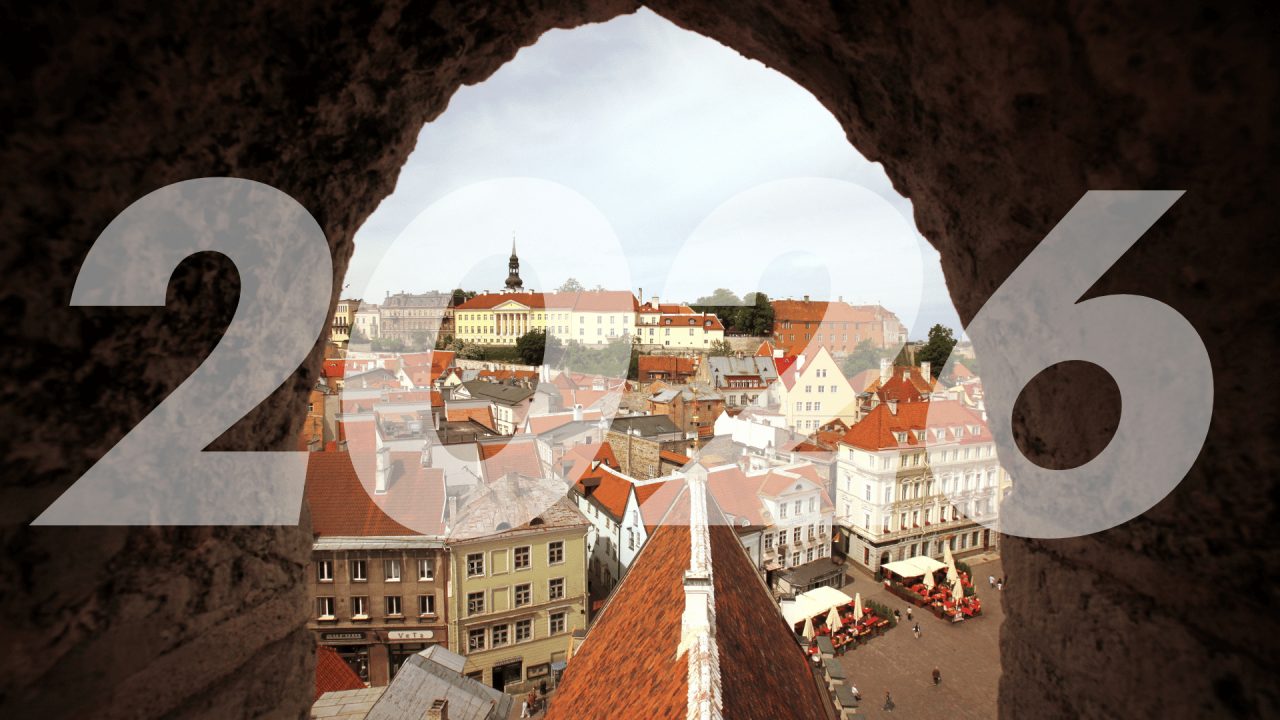
Estonia’s next startup wave: small country, outsized impact
Estonia has long punched above its weight in Europe’s tech ecosystem. From early success stories like Skype and Wise to a new generation of digital-first ventures, the Baltic nation continues to serve as a blueprint for how a small, highly connected market can build globally relevant companies. As 2026 approaches, a fresh cohort of Estonian startups is emerging across AI, fintech, greentech, cybersecurity and even space technology.
While Estonia’s population is just over 1.3 million, its dense network of digital public services, founder-friendly regulation and a mature base of repeat entrepreneurs has created unusually fertile ground for innovation. Investors across Europe are increasingly scanning Tallinn, Tartu and beyond for the country’s next breakout successes.
Below is an editorially curated snapshot of 10 Estonian startups to watch in 2026 and beyond. They span different stages and verticals, but share a common ambition: to scale far beyond the Baltic region and compete on a truly global stage.
1. Starship Technologies – Autonomous delivery at street level
Starship Technologies, co-founded by Ahti Heinla and Janus Friis, has become one of Estonia’s most visible deep-tech exports. Its small, six-wheeled autonomous robots are already a familiar sight on university campuses and in select urban areas across Europe and the US.
The company’s core strength lies in its proprietary computer vision, sensor fusion and navigation algorithms, which allow robots to safely navigate pavements, crossings and complex urban environments. With rising demand for last‑mile logistics and growing pressure to reduce emissions from traditional delivery vans, Starship Technologies is well positioned to capture a larger share of the urban delivery and on-demand commerce market by 2026.
2. Veriff – Digital identity for a borderless economy
Online identity verification has become mission‑critical for banks, fintech platforms, gaming operators and mobility services. Estonian startup Veriff, founded by Kaarel Kotkas, has built a robust identity verification platform that uses AI algorithms, biometrics and document analysis to authenticate users in seconds.
As regulators tighten rules around KYC (Know Your Customer) and AML (Anti‑Money Laundering), demand for secure, user‑friendly verification is accelerating. Veriff is expanding beyond financial services into mobility, online marketplaces and the wider digital identity stack, positioning itself as a core infrastructure layer for the next phase of the digital economy.
3. Skeleton Technologies – Supercapacitors for the energy transition
In the race to decarbonise, Estonia’s Skeleton Technologies has carved out a niche in high‑performance supercapacitors and energy storage systems. Its patented curved graphene materials promise faster charging, longer lifetimes and higher power density than conventional batteries.
With applications in electric buses, grid stabilisation, industrial equipment and heavy transport, Skeleton Technologies is attracting attention from both strategic partners and climate‑focused investors. As Europe doubles down on energy resilience and electrification, the company could become a key enabler of more efficient, reliable power systems.
4. Pipedrive – CRM built by salespeople, for salespeople
Pipedrive is one of Estonia’s best‑known SaaS exports, offering a streamlined CRM platform tailored to small and mid‑sized sales teams. Built with a strong emphasis on usability and pipeline visibility, it competes with far larger US players by focusing on simplicity and workflow‑driven design.
As remote and hybrid work models become standard, demand for intuitive, collaborative sales software is only growing. Pipedrive continues to expand its feature set with sales automation, AI‑powered forecasting and integrations with popular productivity tools, cementing its position in the global SMB market.
5. Bolt – Super‑app ambitions from the Baltics
Founded by Markus Villig, Bolt has evolved from a ride‑hailing challenger into a multi‑vertical mobility and delivery platform. Operating across Europe and Africa, it now offers ride‑hailing, micromobility (e‑scooters and e‑bikes), food delivery and grocery delivery under one brand.
With cities rethinking urban transport and consumers expecting on‑demand access to services, Bolt is positioning itself as a European alternative to US and Asian super‑apps. Its focus on operational efficiency and cost‑conscious expansion could prove decisive as the industry moves towards sustainable unit economics by 2026.
6. Glia – Rethinking digital customer service
Glia offers a digital customer service platform that enables banks, insurers and other enterprises to support customers via chat, voice, video and co‑browsing within their own apps and websites. Rather than forcing users to switch to call centres or external channels, Glia keeps the entire support journey inside the digital product.
As financial institutions accelerate their digital transformation plans, tools that improve customer experience while reducing operational costs are in high demand. Glia aims to become a default layer for digital engagement in heavily regulated sectors.
7. Guardtime – Cybersecurity and data integrity at scale
With roots in Estonia’s pioneering experience in e‑governance, Guardtime has developed a suite of cybersecurity and data integrity solutions for governments, defence, telecoms and critical infrastructure operators. Its core technology, based on hash‑linked data structures, provides tamper‑evident records and verifiable audit trails.
As cyber threats grow more sophisticated and geopolitical tensions raise concerns around critical infrastructure, solutions that guarantee the integrity of data and processes are moving from optional to essential. Guardtime is well placed to benefit from rising public‑sector and enterprise security spending.
8. Planet42 – Mobility access in emerging markets
Planet42 tackles transport inequality by offering a car subscription model aimed at underbanked and underserved consumers, particularly in emerging markets. Using data‑driven risk assessment and partnerships with local dealerships, it helps customers who would otherwise be excluded from traditional car finance.
With rising urbanisation and limited public transport in many regions, affordable vehicle access remains a major barrier to employment and economic mobility. By 2026, Planet42 aims to scale its inclusive mobility‑as‑a‑service model to millions of users.
9. Milrem Robotics – Unmanned ground systems from the Nordics
Milrem Robotics develops unmanned ground vehicles (UGVs) for defence, security and industrial applications. Its modular platforms can be equipped for logistics, reconnaissance, engineering or combat support roles, and are already being tested by several NATO members.
As armed forces and emergency services seek to reduce risk to personnel and enhance situational awareness, demand for advanced robotics and autonomous systems is rising. Estonia’s experience in defence innovation gives Milrem Robotics a strategic advantage in this sensitive, high‑barrier market.
10. ESTCube and the rise of Estonian space tech
Beyond software and mobility, Estonia is quietly nurturing a new generation of space technology ventures. University‑driven initiative ESTCube has already launched small satellites to test novel electric solar wind sail concepts and in‑orbit technologies.
This ecosystem of engineers, researchers and early‑stage startups is building capabilities in small satellites, space data analytics and Earth observation services. By 2026, Estonia’s space sector could emerge as a niche but influential contributor to Europe’s broader NewSpace movement.
Why global investors are watching Estonia in 2026
Several structural advantages underpin Estonia’s steady stream of ambitious startups. The country’s fully digital public services, simple tax regime and the globally known e‑Residency programme reduce friction for founders and international investors alike. A culture of experimentation, combined with accessible engineering talent, allows teams to iterate quickly and test products across borders from day one.
For venture capital funds, corporate innovators and strategic partners, Estonia offers a concentrated pipeline of companies that are born global, capital‑efficient and comfortable operating in highly regulated sectors. As 2026 approaches, the country’s next cohort of startups is poised not only to sustain Estonia’s reputation as a digital frontrunner, but to shape critical areas of Europe’s technological future.
For readers and professionals tracking Europe’s innovation landscape, keeping a close eye on Estonia is no longer optional; it is a practical shortcut to spotting the continent’s next breakout success stories early.