

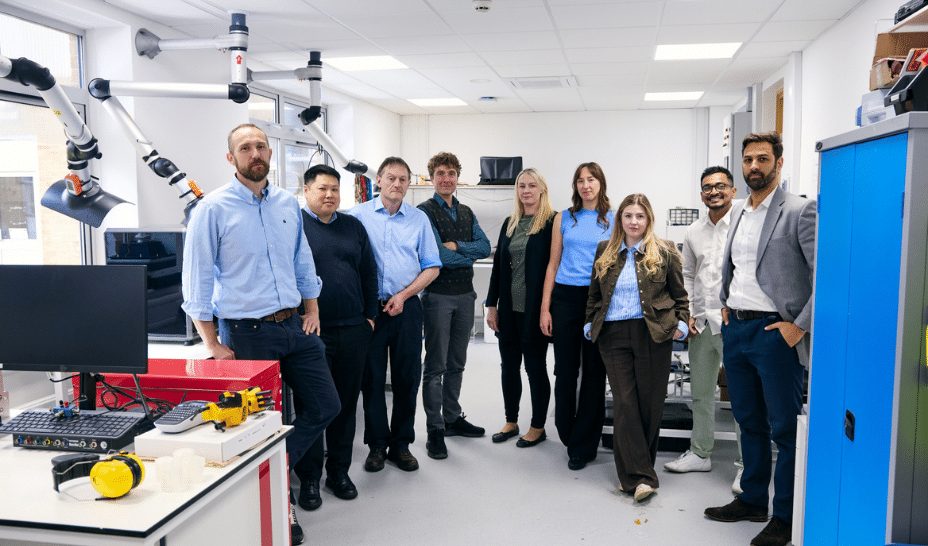
Ionech targets untapped energy in the air
Oxfordshire-based clean-energy innovator Ionech is developing a novel technology designed to convert low-grade thermal energy from ambient air into usable electricity. The company’s approach aims to unlock a vast, largely unused energy source that surrounds buildings, infrastructure and devices every second of the day.
While details of the underlying process have not yet been fully disclosed, Ionech positions its system as a scalable, low-carbon solution that could complement existing renewable energy technologies such as solar power and wind energy. By focusing on the continuous presence of ambient heat, the startup is targeting one of the most persistent challenges in the energy transition: delivering clean power that is not dependent on sunlight or wind conditions.
How harvesting ambient thermal energy could work
Low-grade heat from the environment is typically considered difficult to exploit because its temperature is relatively close to the surrounding air. Traditional heat engines and thermodynamic cycles generally require higher temperature differences to convert heat efficiently into electricity. Ionech is attempting to bridge this gap with a system engineered specifically for the small but constant energy flows present in everyday environments.
Turning background heat into usable power
Although the startup has not yet published full technical specifications, its technology conceptually sits at the intersection of thermal management, materials science and advanced power electronics. Potential approaches in this field include:
- Enhanced thermoelectric materials that convert temperature differences directly into electrical voltage.
- Innovative phase-change systems that capture and release heat in controlled cycles.
- Highly efficient heat exchangers combined with micro-scale energy harvesting circuits.
By tailoring these or similar techniques to ambient conditions, Ionech is seeking to create compact systems that can be integrated into buildings, industrial sites or standalone units, quietly generating power from the background heat that typically goes to waste.
Potential applications across buildings, industry and devices
If Ionech can prove its technology at scale, the range of potential applications is wide. The company’s focus on ambient air heat suggests a design that could be deployed in locations where temperature fluctuations, waste heat or persistent low-grade warmth are present.
Decarbonising buildings and infrastructure
In the built environment, the technology could be integrated into:
- Commercial and residential buildings to recover waste heat from heating and cooling systems.
- Data centres and server rooms, where constant heat output is currently a cost and design challenge.
- Transport hubs and tunnels, where human activity and equipment generate continuous warmth.
By converting a portion of this ambient thermal energy into electricity, property owners could reduce grid demand, cut carbon emissions and improve overall energy efficiency.
Supporting industrial decarbonisation
Industrial sites often release enormous amounts of low-grade heat into the atmosphere. Technologies like the one under development at Ionech could help manufacturers capture a fraction of that energy, feeding it back into site operations or local microgrids. This would align closely with corporate net-zero strategies and new regulatory pressures around energy recovery and emissions reduction.
Powering sensors and connected devices
At a smaller scale, ambient heat harvesting is especially relevant for the growing universe of Internet of Things (IoT) devices. Self-powered sensors that draw energy from their immediate environment can reduce the need for batteries, cut maintenance costs and enable long-lived monitoring systems in remote or hard-to-access locations. A compact solution from Ionech could be integrated into such devices, enabling near-continuous operation with minimal environmental impact.
Positioning within the clean-energy innovation landscape
The work being carried out by Ionech sits within a broader wave of innovation aimed at making global energy systems more flexible, efficient and sustainable. While solar panels and wind turbines have become mainstream, attention is increasingly turning to technologies that can smooth out the intermittency of these sources and extract more value from existing energy flows.
Ambient heat harvesting is particularly attractive because it addresses an energy resource that exists almost everywhere humans live and work. Rather than replacing established renewables, Ionech is positioning its approach as an additional layer in a diversified clean-energy portfolio, potentially working alongside energy storage, smart grids and demand-response systems.
Challenges on the road to commercialisation
Despite its promise, the path from laboratory concept to real-world deployment is demanding for any early-stage clean-tech company. Ionech will need to demonstrate that its process can deliver meaningful power output at a cost that competes with or enhances existing solutions.
Efficiency, cost and scalability
Key metrics for success will include:
- Conversion efficiency – how effectively the system turns small temperature differences into electricity.
- Levelised cost of energy (LCOE) – the overall cost per unit of electricity generated over the system’s lifetime.
- Scalability – the ability to deploy the technology from small devices to large facilities without prohibitive engineering complexity.
Investors and potential partners will closely examine these factors, alongside reliability, maintenance requirements and compatibility with existing infrastructure.
What to watch from Ionech next
As development progresses, the next milestones for Ionech are likely to include pilot installations, independent performance testing and strategic partnerships with building owners, industrial operators and technology integrators. Demonstrating real-world use cases will be crucial to validating the company’s claims and clarifying where its solution provides the greatest value.
For policymakers and energy planners, technologies like those being developed by Ionech highlight the importance of diversifying clean-energy strategies beyond a narrow set of generation options. Harnessing ambient thermal energy could become one of several complementary tools that collectively accelerate the shift toward a low-carbon, resilient power system.
As the company advances from concept to deployment, its progress will be closely watched by stakeholders across the clean-tech ecosystem who are searching for practical ways to turn overlooked energy flows into a reliable source of sustainable power.