

Equal1 Secures $60M to Advance Room-Temperature Quantum Servers
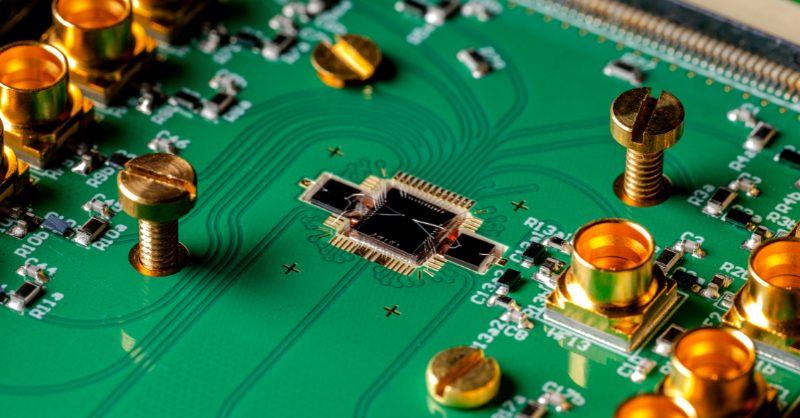
Irish quantum computing startup Equal1, headquartered in Dublin, has raised $60 million to accelerate the development and deployment of its rack-ready, room-temperature quantum servers. Unlike most competing platforms, the company’s systems are manufactured in existing silicon fabs and operate without bulky cryogenic cooling, making them easier to integrate into today’s data centres.
The fresh capital will support production scaling, product refinement and global go-to-market efforts, as Equal1 begins shipping systems to early adopters including the European Space Agency (ESA) and several leading high-performance computing (HPC) centres.
A Quantum Computer That Fits the Rack
Where many quantum systems occupy entire rooms and rely on complex refrigeration units, Equal1 is pursuing a radically different vision: a rack-ready quantum server designed to slide into a standard data centre rack much like a conventional GPU or AI accelerator box.
Leveraging Existing Silicon Manufacturing
At the core of Equal1‘s approach is the use of established CMOS and mainstream semiconductor manufacturing processes. By building its quantum processing units (QPUs) on the same kind of wafers used for everyday chips, the company aims to sidestep the cost and complexity of bespoke fabrication lines.
This strategy offers several advantages:
- Potentially lower production costs through high-volume, mature fabs
- Improved yield and reliability thanks to decades of silicon process optimisation
- Smoother integration with existing data centre infrastructure and server architectures
By aligning to standard hardware footprints and power envelopes, Equal1 positions its quantum servers as a practical, near-term option for organisations that cannot accommodate the footprint or operational complexity of cryogenic systems.
No Cryogenics, No Exotic Plumbing
Most leading quantum computing platforms, particularly those based on superconducting qubits, require operation at temperatures close to absolute zero. This demands large dilution refrigerators, specialised infrastructure and highly trained staff. Equal1‘s technology is engineered to operate at or near room temperature, eliminating the need for such systems.
Removing cryogenics simplifies installation and maintenance, and it narrows the gap between experimental quantum systems and everyday enterprise IT. For many early users, this can mean faster deployment, lower total cost of ownership and an easier path to pilot projects.
Early Customers: ESA and Leading HPC Centres
According to the company, its first commercial systems are already being prepared for shipment to the European Space Agency and multiple top-tier HPC centres. These early deployments are expected to focus on exploring hybrid quantum–classical workflows, benchmarking performance and identifying high-impact use cases.
Space and Scientific Computing as Testbeds
The interest from ESA underlines the potential role of quantum technologies in future space missions, navigation, secure communications and onboard data processing. For space applications, compact, energy-efficient, and robust systems that do not require cryogenic support are especially attractive.
Meanwhile, HPC centres represent a natural proving ground for emerging quantum accelerators. These facilities already run some of the world’s most demanding simulation, optimisation and machine learning workloads. Integrating a rack-ready quantum server into existing supercomputing clusters allows researchers to experiment with quantum-enhanced algorithms alongside traditional CPU and GPU resources.
Positioning in the Global Quantum Race
The new funding positions Equal1 among a growing cohort of companies racing to make quantum computing commercially viable. While many competitors focus on scaling qubit counts or demonstrating theoretical supremacy, Equal1 is emphasising practical deployment: systems that can be ordered, installed in a rack and connected to existing HPC and cloud environments.
From Lab Prototypes to Deployable Products
The shift from laboratory prototypes to deployable quantum servers is a critical step for the industry. Organisations evaluating quantum technologies typically face several barriers:
- Limited access to hardware, often via remote cloud quantum services only
- Operational complexity and specialised facilities requirements
- Uncertainty around workload suitability and performance gains
By offering a physically deployable system that fits into standard data centre racks, Equal1 aims to lower these barriers and encourage hands-on experimentation. The company’s focus on immediate usability may appeal to enterprises that want to build internal expertise now, rather than waiting for large-scale, fault-tolerant machines.
Implications for Data Centres and Enterprise IT
If Equal1‘s approach proves robust and scalable, it could influence how quantum computing is adopted in mainstream IT. Instead of being confined to specialised labs, quantum resources could be treated more like another class of accelerator in the data centre, alongside GPUs, TPUs and FPGAs.
This model aligns with how many enterprises already consume advanced compute: as modular, rack-mounted units, managed through familiar orchestration, monitoring and security frameworks. For cloud providers and HPC operators, the prospect of integrating quantum hardware without redesigning entire facilities is particularly compelling.
What Comes Next for Equal1
The $60 million funding round gives Equal1 the runway to refine its hardware, expand its software stack and deepen collaborations with early adopters. Key priorities are expected to include:
- Scaling up qubit performance and system stability
- Developing robust software development kits (SDKs) and programming tools
- Building partnerships with research institutions, industry consortia and cloud platforms
As quantum technologies move from theoretical promise toward practical deployment, companies like Equal1 that prioritise manufacturability, integration and user accessibility are likely to play an outsized role in shaping how the first generation of enterprise quantum systems is adopted.
For now, the company’s rack-ready, room-temperature quantum servers offer a tangible step toward making quantum computing a standard part of the modern HPC and data centre toolkit.