

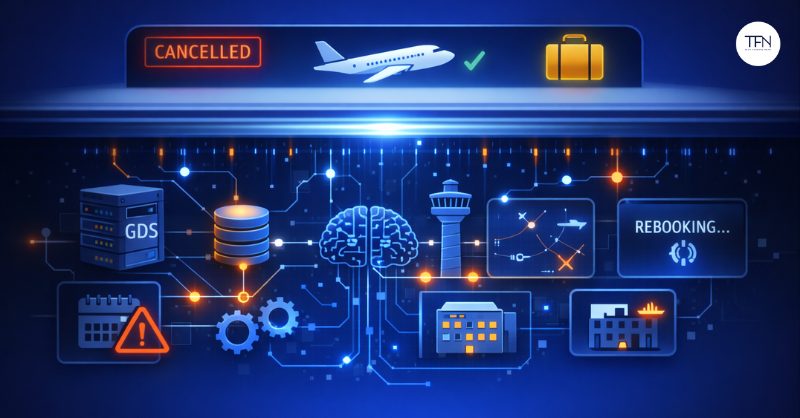
Travel Tech’s Next Wave Is Leaving the Screen Behind
The travel industry has spent the last decade obsessing over slick apps, beautiful booking engines and frictionless checkouts. Yet by 2026, the most valuable travel technology is expected to sit far away from the customer interface. Instead of chasing the next viral app, investors and operators are turning their attention to the invisible stack: infrastructure, data plumbing, connectivity and automation that customers never see but always feel.
This shift is reshaping where capital flows, how travel brands compete and which technologies will define the next generation of digital travel.
From Shiny Apps to Deep Infrastructure
For years, online travel growth was driven by consumer-facing innovation. Booking platforms, metasearch engines and mobile apps gave travelers unprecedented control. But this layer has matured. User interfaces now look and feel similar, and differentiation is increasingly marginal.
By contrast, the systems that power these interfaces are often outdated, fragmented and difficult to integrate. Legacy reservation platforms, siloed databases and manual workflows create friction that no amount of design polish can fix.
As a result, the real opportunity lies in rebuilding the travel stack from the inside out:
- Replacing legacy global distribution systems (GDS) with more flexible, API-first platforms
- Standardising and cleaning operational data across airlines, hotels and mobility providers
- Automating back-office processes that still rely on email, spreadsheets and call centres
- Orchestrating inventory and pricing in real time instead of in batch updates
These are not consumer-visible features, but they are the foundation that will determine which brands can innovate quickly and profitably.
Why the Interface Is No Longer the Main Battleground
Interfaces Have Reached Diminishing Returns
Most frequent travelers already know how to search, compare and book. Upgrades in the user interface now deliver incremental gains rather than step changes. A slightly faster search result or a marginally cleaner layout no longer justifies huge investment.
In contrast, a more intelligent pricing engine, a more accurate availability feed or a more reliable connectivity layer can unlock significant revenue and cost savings, even if the traveler never notices directly.
Commoditisation of Front-End Experiences
The rise of open-source frameworks and low-code tools has made it easier than ever to build modern interfaces. What was once a competitive advantage has become a commodity.
Travel brands increasingly differentiate not through design alone, but through proprietary data, unique inventory access and operational reliability — all of which sit behind the screen.
The Power of Invisible Reliability
Travelers may never see a line of code, but they feel the impact of robust infrastructure when:
- Flights are rebooked automatically during disruptions
- Hotel overbookings are prevented before they occur
- Loyalty points are updated instantly across partners
- Refunds and vouchers are processed without a support call
These outcomes are powered by back-end systems, not by the visible interface. As expectations for reliability rise, the value of this invisible layer grows.
Key Technologies Powering the 2026 Travel Stack
API-First Connectivity and Orchestration
The industry is moving toward highly modular, API-first architectures that allow airlines, hotels, rail operators and mobility providers to connect and collaborate more easily. Instead of brittle point-to-point integrations, new platforms act as orchestration layers, normalising data and routing requests in real time.
Startups and incumbents that can sit at this orchestration layer — aggregating, cleaning and enriching supply — are likely to capture significant value, even if their brand is never shown to the traveler.
Data Infrastructure and Real-Time Analytics
Travel generates vast volumes of data, but much of it remains underused due to fragmentation. Modern data infrastructure is changing this, enabling:
- Unified customer profiles across channels and brands
- Real-time demand forecasting and dynamic pricing
- Predictive disruption management for flights and ground transport
- Operational analytics for staffing, maintenance and route planning
These capabilities depend on cloud-native data platforms, streaming pipelines and advanced AI algorithms — none of which are visible in the booking flow, but all of which shape the traveler’s experience.
Automation and AI in Operations
Generative AI and automation are moving beyond chatbots and into the operational core of travel businesses. Use cases include:
- Automated handling of schedule changes, cancellations and rebookings
- Smart routing of customer requests to the right agent or channel
- AI-assisted revenue management and inventory allocation
- Fraud detection in payments and loyalty programmes
These systems rarely appear in the interface but can reduce costs, increase revenue and improve service levels at scale.
Privacy, Consent and the New Data Reality
The text surrounding cookie banners and consent preferences highlights another critical factor: regulatory and consumer pressure on data usage. Travel companies must navigate complex frameworks governing personal data, tracking and profiling.
Building compliant, privacy-aware infrastructure is now a strategic necessity. Systems must:
- Store and respect granular consent choices across devices and sessions
- Segment data based on legal basis, such as consent or legitimate interest
- Integrate with hundreds of advertising and analytics vendors without losing control
Once again, the traveler sees only a banner, but the real technical and strategic work happens behind it, in data governance and identity resolution layers.
What This Shift Means for Investors and Operators
Where Capital Is Likely to Flow
By 2026, the most attractive travel tech investments are expected to be:
- Vertical infrastructure platforms that modernise core airline, hotel and rail systems
- Data and analytics layers that unify and monetise operational and customer data
- Connectivity hubs that simplify integrations across the fragmented travel ecosystem
- Automation engines that reduce reliance on manual processes and call centres
These companies may never build consumer brands, but they will power those that do.
How Travel Brands Should Respond
Travel operators that want to stay competitive should:
- Audit their technology stack to identify bottlenecks in connectivity and data
- Prioritise migration to modular, API-driven systems
- Invest in data quality, governance and analytics talent
- View the interface as the tip of the iceberg, supported by a robust, flexible core
Those that treat the app as the product, rather than as a window into a powerful infrastructure, risk falling behind.
The Future of Travel Tech Is Largely Invisible
By 2026, the travel experiences that feel effortless, resilient and personalised will be powered by technologies that live far from the customer interface. The winners will be the companies that master the invisible layers — connectivity, data, automation and compliance — turning complex global operations into something that looks simple on a screen.
For travelers, the story will be one of fewer disruptions, smarter offers and smoother journeys. For the industry, the story is about a decisive shift in where value is created: deep in the stack, not at the surface.