

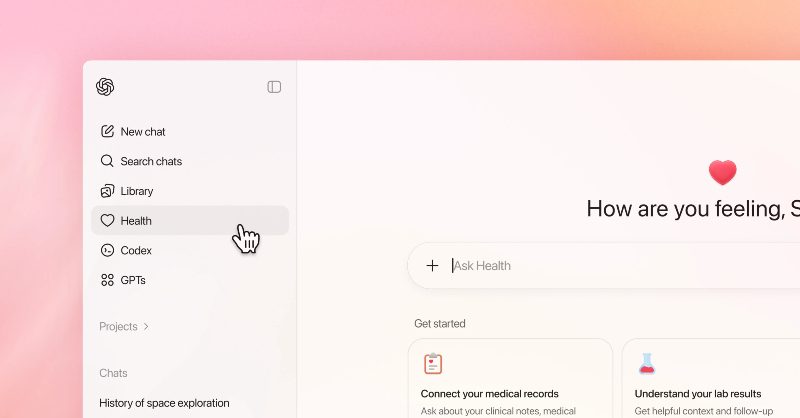
OpenAI Experiments With ChatGPT Health as a Personal Data Hub
OpenAI is testing a new feature called ChatGPT Health that aims to transform its flagship chatbot into a central hub for personal health information. The experimental capability, reported by technology outlet TFN, would allow users to connect data from wearables, health apps and other digital sources directly into ChatGPT for tailored wellness guidance.
The move signals a deeper push by OpenAI into the fast‑growing intersection of digital health, personal data platforms and AI assistants. If fully rolled out, ChatGPT Health could become a single interface where users review activity metrics, sleep patterns, nutrition data and other health signals while receiving personalised explanations and recommendations.
What ChatGPT Health Is Designed to Do
A unified view of fragmented health data
Consumers increasingly generate vast amounts of information through fitness trackers, smartwatches, sleep monitors and health apps. Yet this data is often scattered across separate dashboards and notifications. ChatGPT Health appears positioned as a unifying layer on top of that ecosystem.
According to early descriptions, the feature would:
- Allow users to connect third‑party devices and apps so that ChatGPT can access their metrics with consent.
- Present consolidated summaries of key indicators such as steps, heart rate trends, sleep duration and workout intensity.
- Enable conversational queries like “How did my sleep this week compare to last week?” or “Am I more active on workdays or weekends?”
By translating raw numbers into natural‑language explanations, ChatGPT Health aims to make health analytics more approachable for non‑experts.
From static dashboards to conversational coaching
Unlike traditional tracking apps that rely on charts and graphs, ChatGPT Health is built around AI‑driven conversation. Users would be able to ask follow‑up questions, request clarifications and explore scenarios in real time.
Potential use cases include:
- Asking why certain days show elevated resting heart rate and whether this aligns with reported stress or poor sleep.
- Requesting a plain‑English explanation of metrics such as HRV (heart rate variability) or VO2 max.
- Exploring how changes in bedtime, caffeine intake or exercise correlate with sleep quality over weeks or months.
This conversational layer could help bridge the gap between complex quantified self data and practical lifestyle decisions.
Privacy, Consent and Data Governance
Why data protection is central
Turning a general‑purpose chatbot into a health data hub raises immediate questions about privacy, data security and regulatory compliance. Health‑related information is among the most sensitive categories of personal data, and misuse or breaches can have serious consequences.
The broader digital ecosystem around ChatGPT Health, as reflected by detailed cookie and consent notices on partner sites, underscores how carefully data flows are being scrutinised. Many services now highlight their use of tracking technologies for personalised advertising, audience measurement and service development, while offering granular controls to users.
Granular consent and user control
In line with European frameworks such as the IAB TCF and regulations like the GDPR, platforms connected to ChatGPT Health emphasise:
- Clear categorisation of cookies as necessary, functional, statistics or marketing.
- Options to accept all, reject all or customise settings at a detailed level.
- Vendor‑specific consent for Google Ad Tech Providers and other third parties.
- Storage of consent choices in dedicated cookies such as ‘euconsent’, sometimes for up to two years, to remember user preferences.
The same principles are likely to be critical for ChatGPT Health itself. Users will expect:
- Explicit opt‑in before any health data is integrated into ChatGPT.
- Clear explanations of which partners, if any, can access that information.
- Easy ways to revoke access, delete data and change settings over time.
The Strategic Stakes for OpenAI in Digital Health
From general assistant to health companion
For OpenAI, ChatGPT Health is more than a feature test; it is a step toward positioning its chatbot as a trusted health companion in everyday life. While the system is not a replacement for clinicians, it could occupy a significant role in the broader digital health stack.
By centralising data and offering context‑aware explanations, ChatGPT Health could:
- Increase user engagement and retention within the ChatGPT ecosystem.
- Open pathways for partnerships with wearable manufacturers, fitness platforms and telehealth providers.
- Strengthen OpenAI’s position in the competition among AI assistants from major technology firms.
However, success will depend on how convincingly OpenAI can demonstrate responsible handling of sensitive health‑adjacent data.
Balancing innovation with safety
Any AI system that comments on health patterns must navigate concerns about accuracy, bias and over‑reliance. Even when positioned as informational rather than diagnostic, ChatGPT Health will need robust safeguards:
- Clear disclaimers that it does not provide medical diagnoses or replace professional care.
- Guidance that encourages users to consult doctors for symptoms, treatment decisions or emergencies.
- Careful tuning of AI algorithms to avoid overconfident or misleading statements about health risks.
Regulators and medical professionals are watching such tools closely, particularly where they might intersect with definitions of a medical device in jurisdictions like the United States and the European Union.
What Users Should Watch Next
ChatGPT Health remains an emerging feature, and details on availability, geographic rollout and supported integrations are still limited. Prospective users should monitor official OpenAI communications for:
- Lists of compatible wearables and apps.
- Policies governing data retention, sharing and deletion.
- Any partnerships with healthcare institutions or certified wellness providers.
As AI‑powered assistants move deeper into personal health territory, the balance between convenience and privacy will be decisive. ChatGPT Health illustrates how quickly that frontier is advancing, and how central issues of consent, security and trust have become to the next generation of AI‑driven consumer services.