

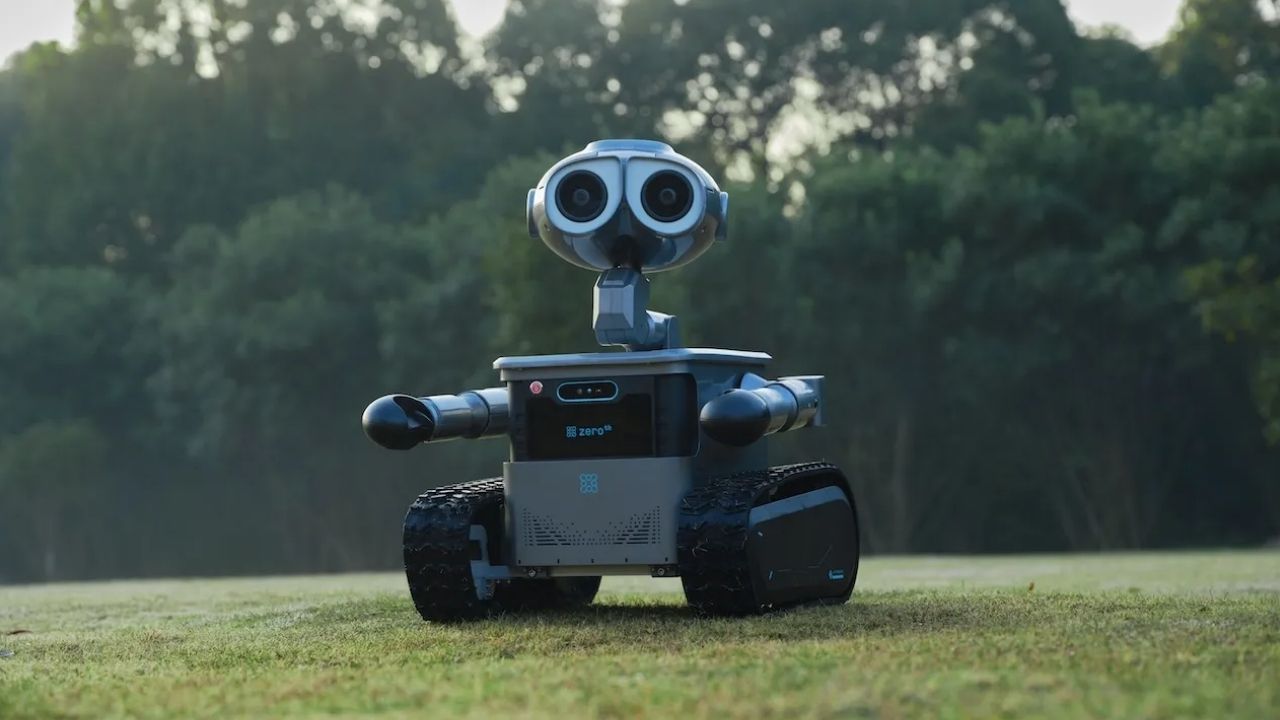
Zeroth brings sci-fi to reality with a new autonomous droid. While China gets a licensed WALL-E, the US market welcomes Spirit, a high-end AI companion.
LAS VEGAS — The dream of owning a Pixar-perfect robot companion has finally materialized, albeit with a complex licensing twist. As the consumer electronics world descends upon Las Vegas for CES 2026, the Beijing-based robotics startup Zeroth is capturing headlines with a dual-product strategy that brings the beloved character WALL-E to life, while offering Western consumers a distinct, high-tech alternative.
Bringing Animation to Reality
For the market in China, Zeroth has achieved a feat of engineering and licensing that fans have awaited for nearly two decades. Through an official partnership with Disney, the company has produced a fully functional, autonomous replica of WALL-E.
This isn’t a plastic toy; it is a complex robotics platform. The unit mimics the character’s signature binocular eye movements, caterpillar tread mobility, and emotive sound design with uncanny accuracy. Videos of the bot navigating apartments and interacting with pets have already gone viral on TikTok and Weibo, showcasing an “Embodied AI” that understands context and displays what appears to be genuine curiosity.
Meet ‘Spirit’: The US Alternative
However, due to strict licensing agreements, the Disney-branded unit is currently exclusive to the Chinese market. For customers in the United States and Europe, Zeroth is launching a sibling model named Spirit.
Retailing for a premium $5,599, Spirit shares the exact same internal chassis, motor systems, and artificial intelligence brain as its famous counterpart. The difference lies in the exterior design. Lacking the rusted yellow aesthetic of the movie character, Spirit features a sleek, white-and-grey industrial design that observers have described as the “futuristic cousin” of the original bot.
While it lacks the nostalgic branding, Spirit is marketed as a serious piece of consumer technology. It stands approximately at knee-height and utilizes the company’s proprietary “Conscious OS.”
More Than Just a Toy
The hefty price tag places these robots in the luxury tech category, competing with high-end home appliances rather than toys. Zeroth justifies the cost with the onboard technology. The robots are equipped with LiDAR sensors for mapping, advanced computer vision for facial recognition, and Large Language Models (LLMs) that allow for fluid, natural conversation.
Unlike previous home robots that were limited to rigid commands, Spirit is designed to develop a unique personality based on its interactions with the owner. It can patrol the home for security, act as a mobile personal assistant, and express a wide range of simulated emotions through its animated eyes and body language.
The Rise of Companion Robotics
Industry analysts suggest that 2026 may be the year “social robotics” finally breaks into the mainstream. While products like Sony‘s Aibo paved the way, Zeroth is betting that the combination of generative AI and expressive hardware will bridge the “uncanny valley.”
Pre-orders for the US model have opened immediately, with the first units expected to ship in late Q2. Whether American consumers will embrace a $5,600 robot that almost looks like their favorite movie character remains the year’s biggest gamble in consumer robotics.