

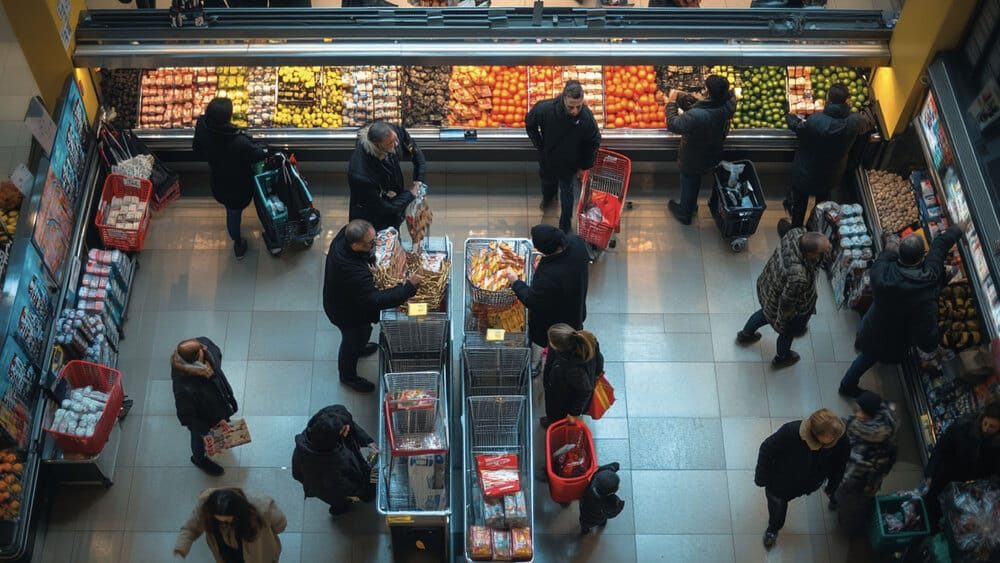
Dailyza takes a closer look at how Europe’s food retailers are moving beyond “innovation theater” and turning startup partnerships into measurable, real-world outcomes. Across the continent, grocers and supermarket groups are increasingly acting like platforms—opening their stores, data, logistics networks, and procurement processes to young companies that can solve urgent challenges such as food waste, supply-chain resilience, and decarbonisation.
What’s changing is not just the number of pilots, but the seriousness of execution. Retailers are tightening timelines, defining success metrics earlier, and creating pathways from proof-of-concept to multi-store rollout. For startups, that shift can mean the difference between a promising demo and a sustainable business.
Why retailers are accelerating startup collaboration
Europe’s grocery sector is operating under overlapping pressures: volatile input costs, shifting consumer expectations, stricter sustainability requirements, and operational complexity across thousands of SKUs. In that environment, retailers are increasingly treating startup collaboration as a strategic necessity rather than a branding exercise.
Several factors are pushing the pace:
- Margin pressure and cost volatility: Retailers need efficiency tools that deliver rapid ROI, from energy optimisation to better demand forecasting.
- Rising expectations around ESG and transparency: Consumers and regulators want credible progress on emissions, packaging, and sourcing.
- Operational complexity: Multi-country supply chains require better visibility, automation, and risk management.
- Competition from discounters and digital-native players: Differentiation increasingly comes from service quality, availability, and smarter personalisation.
Retailers have also learned a hard lesson: pilots that aren’t designed for scale fail quietly. The most effective programs now begin with a clear problem statement, an internal owner, and a plan for deployment if targets are met.
From pilot to rollout: what “real-world impact” looks like
Retail innovation becomes meaningful when it changes day-to-day operations—what’s ordered, how it’s moved, how it’s priced, and what ultimately reaches shoppers. Increasingly, retailers are structuring partnerships around specific operational outcomes rather than broad experimentation.
Cutting food waste with better forecasting and dynamic decisions
One of the most common targets is food waste. Startups are helping retailers improve demand forecasting, optimize replenishment, and enable smarter markdown strategies. In practice, that can include tools that predict store-level demand more accurately, recommend earlier interventions on at-risk inventory, or automate price reductions based on sell-through patterns.
The impact is twofold: waste reduction supports sustainability goals while also protecting margins. Retailers that can operationalize these tools across regions gain a compounding advantage, because every incremental improvement in forecasting reduces downstream inefficiencies in transport, labor, and disposal.
Strengthening supply chains with visibility and automation
Disruptions—from extreme weather to geopolitical shocks—have made supply-chain resilience a board-level topic. Startups in logistics, inventory intelligence, and traceability are increasingly being tested in live retail environments, where data quality and operational constraints are unforgiving.
Retailers are looking for solutions that can integrate with existing systems, improve on-shelf availability, and reduce manual workload. That often means automation that is “boring but valuable”: better exception handling, improved warehouse picking, more accurate ETA predictions, and clearer supplier performance insights.
Decarbonisation that shows up in operations
Retailers are under pressure to demonstrate credible progress on decarbonisation. Startup solutions range from energy management for stores and refrigeration to route optimization and packaging innovation. The shift toward impact means retailers are increasingly demanding measurement frameworks—how emissions are calculated, what’s in scope, and how improvements are tracked over time.
For startups, this is an opportunity and a test. Retailers want solutions that can survive procurement scrutiny, integrate with compliance reporting, and deliver results without requiring a full operational overhaul.
What retailers now expect from startups
As programs mature, the bar rises. Retailers are more selective and increasingly expect startups to arrive with a clear understanding of constraints: thin margins, labor realities, legacy infrastructure, and strict food safety and data rules.
Common expectations include:
- Fast integration and minimal disruption to store operations
- Clear KPIs tied to commercial outcomes (waste reduced, labor hours saved, availability improved)
- Security and compliance readiness, especially for customer and transaction data
- A credible scaling plan across multiple stores, formats, and countries
Retailers also increasingly value startups that can co-design solutions with frontline teams. Tools that ignore store managers and warehouse staff often stall, regardless of technical sophistication.
How procurement and governance are evolving
A frequent blocker in retail-startup collaboration is procurement: complex vendor onboarding, long decision cycles, and risk-averse governance. To address this, some retailers are creating structured “fast lanes” for innovation vendors—standardized contracts, predefined pilot budgets, and clearer decision rights.
Another trend is tighter cross-functional ownership. Innovation teams alone cannot scale a solution; operations, IT, finance, and category leaders must be involved early. The most effective retailers assign an internal business owner who is accountable for results and can champion rollout if the pilot performs.
Why this matters for Europe’s startup ecosystem
Retail is one of Europe’s largest industries, and its operational footprint makes it a powerful testbed for applied innovation. When grocers commit to scaling what works, they create a pathway for startups to prove traction with real transactions, real customers, and real constraints—evidence that resonates with investors and strategic partners.
For the broader ecosystem, this shift can also reshape funding dynamics. Startups that demonstrate repeatable deployments with major retailers are often better positioned to raise growth capital, because they can point to predictable revenue drivers and measurable unit economics rather than one-off pilots.
What to watch next
The next phase will likely be defined by consolidation and standardization: fewer pilots, clearer benchmarks, and stronger requirements around interoperability. Retailers will continue to prioritize solutions that deliver immediate operational value while supporting long-term sustainability objectives.
For startups, the opportunity is significant—but so is the expectation. Europe’s food retailers are signaling that innovation is welcome, provided it can be deployed at scale, measured rigorously, and embedded into the day-to-day machinery of retail.
Dailyza will continue tracking how these partnerships evolve, which technologies move from experimentation to rollout, and how Europe’s grocery sector turns startup ingenuity into tangible outcomes for shoppers, suppliers, and the climate.