

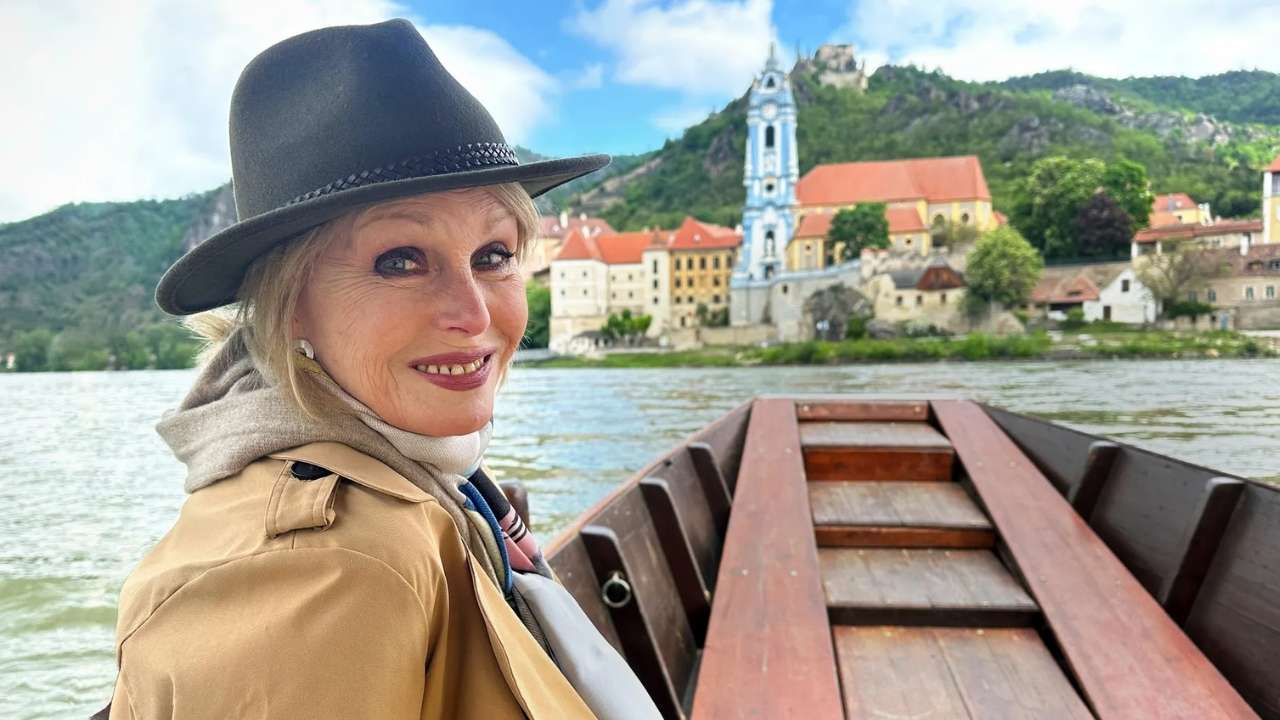
Joanna Lumley is back on screen with a new globe-trotting series for the BBC, taking viewers along one of the continent’s most storied waterways in Joanna Lumley’s Danube: Europe’s Mightiest River. Billed as a fast-moving adventure across the heart of Europe, the documentary follows the Danube from its beginnings beneath Germany’s Black Forest to its final spread into the Black Sea, using the river as a living thread connecting landscapes, communities and history.
The programme arrives with a familiar promise for fans of Lumley’s travel work: a personable, curious host moving briskly through remarkable places, meeting locals, and turning a geographic route into a cultural narrative. It also lands at a moment when travel audiences are increasingly drawn to “slow travel” ideas—rail, river routes and cross-border itineraries—making the Danube an especially timely subject for a major broadcaster.
A river that crosses borders—and stories
The Danube is frequently described as Europe’s most international river, and the series leans into that idea by tracking a route that naturally moves through different languages, cuisines and traditions. Starting in Germany’s Black Forest, the journey sets out from the river’s origins and gradually expands in scale and atmosphere as the Danube widens and the cultures along its banks shift.
As Lumley travels east, the documentary highlights the contrast between alpine scenery and lowland plains, as well as the way river life changes from source to sea. The Danube’s significance is not only scenic; it has long been a strategic artery for trade, migration and empire-building. That layered past gives the series plenty of material to explore, even when the tone stays light and conversational.
Encounters on the way: nuns, peaks and Hungary’s horsemen
According to the programme description, one of the early memorable stops includes Bavaria’s beer-brewing nuns—an example of how the show uses specific, character-rich encounters to anchor broader regional identity. These kinds of scenes typically serve a dual purpose: they offer a warm human entry point while also touching on local craft traditions and the economics of small-scale production tied to tourism.
Further along the route, the series moves into Slovakia, where the landscape shifts into “stunning snow-capped peaks.” Mountain backdrops provide visual drama, but they also underscore the Danube’s geographic complexity: the river is often imagined as a single ribbon, yet its basin touches diverse terrains that influence climate, agriculture and settlement patterns.
In Hungary, Lumley meets the country’s cowboys, nodding to equestrian culture and the plains traditions that remain part of national identity and visitor appeal. For travel audiences, these segments tend to work as practical inspiration—what to see, who to meet, and what experiences are distinctive—without turning the programme into a checklist.
The Danube Delta: wilderness at the water’s edge
One of the signature destinations teased in the series is the Danube Delta, described as a “unique wilderness.” The delta is often celebrated for biodiversity and birdlife, and it offers a different kind of travel story than the river’s urban stretches: less architecture and more ecology, less museum culture and more wetland rhythms.
By ending at the Black Sea, the series also mirrors a classic travel arc—starting with a hidden source and finishing with an expansive horizon. For viewers, that structure can make the Danube feel graspable as a continuous route, even though it spans multiple countries and countless local variations.
Behind the series: production credits and format
The documentary is directed by Eric McFarland and produced by Burning Bright Productions for the British Broadcasting Corporation. The listing notes a TV-14 rating and positions the series as a premium factual travel title—part cultural exploration, part on-the-road entertainment.
While the BBC’s travel and culture output often mixes history, food, landscape and personal storytelling, Lumley’s presence typically adds a particular tone: wry, observant and warmly engaged with the people she meets. That approach can broaden the show’s appeal beyond hard-core travel enthusiasts to viewers who simply enjoy character-led documentaries with strong visuals.
Availability: regional restrictions may apply
One practical detail for audiences is that the BBC listing indicates the content may not be available in every region, with a notice directing users to an FAQ page for more information. For international viewers, that can mean the difference between immediate streaming access and waiting for distribution via partners or alternative platforms.
Regional availability has become a defining feature of modern TV releases, especially for public broadcasters whose rights deals vary by territory. For a travel series designed to attract wide interest, those limitations can shape how quickly it becomes part of the broader online conversation.
Why the Danube still works as a TV journey
Rivers remain one of travel television’s most reliable narrative devices: they create a natural direction of movement, they connect disparate places, and they provide recurring visual motifs—bridges, boats, banks, markets and marshes. The Danube, in particular, offers an unusually dense concentration of European history and contemporary life along a single corridor.
For viewers planning future trips, the series may also function as a soft guide to the idea of “following the river”—by rail, by road, or by boat—sampling cultures as the geography changes. For everyone else, it is a reminder that Europe’s most famous cities and its quietest wetlands can sit on the same waterway, linked by current and time.
Dailyza will be watching how audiences respond to Lumley’s latest expedition—and whether the Danube’s mix of craft traditions, mountain vistas and delta wilderness sparks a fresh wave of interest in river-based travel across Europe.