

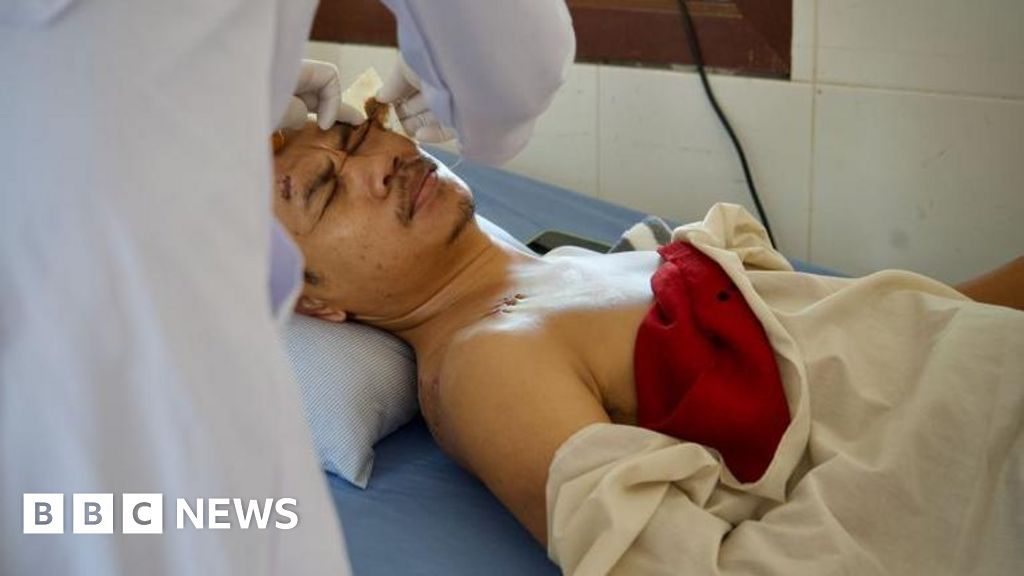
Fighting has flared again along the Thailand-Cambodia border despite a July ceasefire reportedly brokered by Donald Trump, underscoring how quickly fragile truces can unravel when longstanding disputes and local security pressures collide.
While details of the latest exchanges remain fluid, the renewed violence has revived concerns about civilian safety in border communities, the durability of diplomatic guarantees, and the risk that a localized confrontation could escalate if not swiftly contained. The episode also highlights the limits of headline-grabbing mediation when underlying grievances, command-and-control dynamics on the ground, and domestic political incentives remain unresolved.
What is happening on the Thailand-Cambodia border
Reports indicate that armed confrontations have resumed after the July ceasefire, with both sides facing renewed scrutiny over troop movements, rules of engagement, and the mechanisms used to prevent miscalculation. Border areas can be particularly prone to rapid escalation because patrols operate in close proximity, communications can be inconsistent, and contested terrain can turn routine activity into a flashpoint.
For residents living near crossing points and rural border zones, even short bursts of fighting can disrupt daily life. Markets, schools, and transport routes can be affected by sudden security restrictions, while farmers and traders may avoid certain roads and fields out of fear of being caught in crossfire. In past episodes of tension between the two neighbors, temporary displacement and heightened military posture have been recurring consequences.
The ceasefire’s limits and why clashes return
A ceasefire can stop immediate bloodshed, but it rarely resolves the deeper drivers of conflict. When the agreement is associated with a high-profile figure such as Donald Trump, it may generate political momentum and international attention, yet still depend on practical implementation: clear demarcation of positions, reliable communication channels, and verification steps that both sides trust.
Renewed clashes often stem from a combination of factors:
- Disputed border lines and competing historical claims that create recurring friction.
- Local incidents, including patrol encounters or allegations of encroachment, that can trigger retaliation.
- Domestic politics, where leaders may feel pressure to project strength or respond forcefully to perceived violations.
- Weak enforcement mechanisms, especially if there is no robust monitoring or mutually accepted process to investigate incidents.
Even when central governments prefer restraint, events on the ground can move faster than diplomatic channels. Commanders may act on incomplete information, and social media rumors can inflame tensions, making de-escalation harder in the critical first hours of a confrontation.
Why the Thailand-Cambodia relationship is sensitive
Thailand and Cambodia share deep cultural and economic ties, but their relationship has also been shaped by periodic disputes over border areas and heritage sites. These disputes can carry strong national symbolism, making compromise politically delicate. When tensions rise, they can quickly become a matter of national pride rather than a narrow security incident.
Border disputes also tend to be multidimensional. Beyond sovereignty questions, there are practical concerns about cross-border trade, migration, and law enforcement. Any deterioration in security can affect not only local residents but also the wider regional economy, particularly if transport corridors or crossings face heightened restrictions.
Economic and humanitarian spillovers
Even limited fighting can create outsized disruptions. Border commerce often relies on predictable rules and safe transit. If authorities tighten controls or temporarily close crossings, small businesses and day laborers can be hit first. In addition, a spike in insecurity can strain local health services if casualties rise or if residents relocate to safer areas.
Humanitarian concerns typically center on the safety of civilians near contested zones, access to medical care, and the need for accurate public information. In volatile situations, misinformation can spread quickly, prompting unnecessary panic or dangerous travel decisions.
Diplomacy after a high-profile truce
A truce associated with a prominent mediator can create expectations of stability, but it can also complicate diplomacy if either side believes the other is leveraging international attention for advantage. Sustainable de-escalation usually requires quieter, technical work: joint committees, incident hotlines, agreed patrol procedures, and credible investigation processes when accusations arise.
Regional stakeholders may also play a role. Southeast Asian diplomacy often emphasizes dialogue and non-escalation, and regional forums can provide channels to reduce tensions. However, the effectiveness of those channels depends on the willingness of both parties to prioritize stability and accept confidence-building measures that may be politically sensitive at home.
What to watch next
Several indicators will signal whether the current flare-up remains contained or risks widening:
- Whether both sides publicly reaffirm commitment to the July ceasefire and outline practical steps to restore it.
- Any evidence of reinforcements or sustained artillery exchanges, which would raise the risk of escalation.
- Announcements of joint talks, third-party facilitation, or new monitoring arrangements.
- Measures taken to protect civilians, including evacuation guidance, safe corridors, and transparent updates.
For now, the renewed fighting serves as a reminder that ceasefires are only as durable as the systems built to enforce them. As Dailyza continues to follow developments, attention will focus on whether Bangkok and Phnom Penh can quickly restore calm and prevent a border dispute from hardening into a broader crisis.