

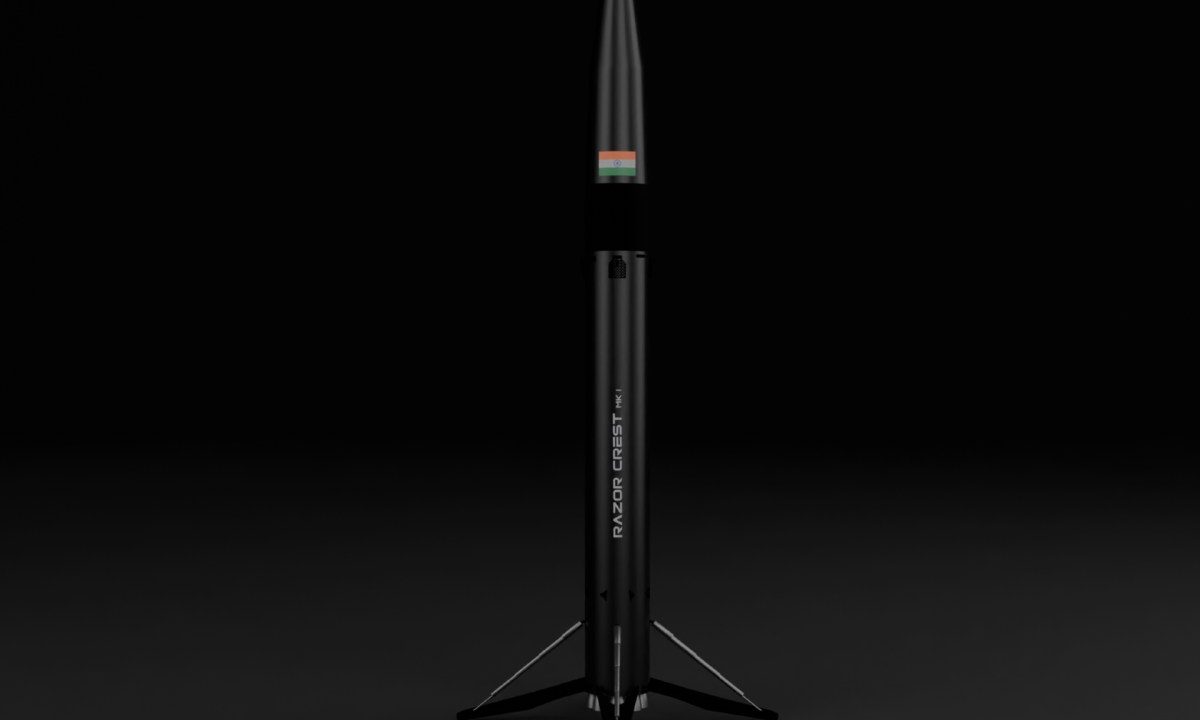
EtherealX is stepping into one of the most competitive arenas in modern aerospace: orbital launch. The company says it is building a fully reusable rocket designed to challenge SpaceX and its workhorse Falcon 9, a vehicle that has come to define the economics of commercial spaceflight through frequent missions and booster landings.
The ambition is straightforward but difficult to execute: deliver reliable access to orbit at a price point that can compete with a system that already flies often, has a deep backlog, and benefits from years of operational data. Yet the timing is notable. Global demand for launches is being pulled upward by mega-constellations, defense requirements, Earth-observation growth, and a steady stream of venture-backed satellite startups that want more options beyond today’s dominant providers.
A direct bet on full reusability
In launch, “reusability” can mean many things—recovering a first stage, refurbishing fairings, or eventually reusing upper stages. EtherealX’s stated goal of a fully reusable rocket signals an attempt to push beyond partial reuse models, aiming for a vehicle that can be turned around rapidly with minimal refurbishment.
If achieved, full reuse has the potential to compress costs by spreading hardware expenses across more flights and by reducing the need to manufacture new stages for each mission. The largest hurdle is not simply landing hardware safely, but doing so consistently, economically, and on a cadence that customers can trust.
Why Falcon 9 is the benchmark EtherealX must beat
Falcon 9 is not just a rocket; it is a mature operational system with an integrated supply chain, proven recovery procedures, and a customer pipeline spanning commercial satellite operators, government agencies, and internal missions. Its reliability record, high launch cadence, and established pricing have made it the default choice for many payloads that fit its performance envelope.
That creates a high bar for any newcomer. To win meaningful market share, EtherealX will likely need to compete on a combination of:
- Price that remains attractive after accounting for insurance, schedule risk, and integration costs
- Schedule certainty, including the ability to accommodate customer timelines and slip tolerance
- Performance to key orbits, including sun-synchronous and mid-inclination regimes common for Earth observation and broadband constellations
- Operational cadence that proves reusability is not merely possible, but routine
Even then, many customers will seek redundancy rather than replacement: a second provider that can reduce dependency risk and provide negotiating leverage.
Market forces pushing demand for new launch providers
The commercial launch market is being reshaped by a few powerful dynamics. First, satellite constellations require repeated launches over multiple years, favoring providers that can offer predictable capacity. Second, national security customers increasingly value diversified launch options and resilient supply chains. Third, the rise of smaller satellites and rapid iteration cycles has increased the value of responsive launch windows.
At the same time, the industry is sensitive to two constraints: limited launch infrastructure and the complexity of scaling production while maintaining quality. A new entrant must not only build a rocket, but also establish test programs, manufacturing throughput, regulatory compliance, and launch site operations.
Engineering and operations challenges that will define credibility
For EtherealX, credibility will likely be built through a sequence of milestones: engine testing, stage-level demonstrations, and incremental flight tests that validate guidance, recovery, and refurbishment assumptions. In the launch industry, hardware can look impressive in renderings, but customers and investors tend to wait for evidence of repeatable performance.
Reflight cadence and refurbishment economics
The promise of reusability depends on how quickly a vehicle can be inspected, repaired, and relaunched. If refurbishment requires extensive labor or frequent parts replacement, the cost advantages shrink. A rapid reflight strategy typically demands robust thermal protection, durable structures, and systems designed for maintainability from the start.
Regulatory and range considerations
Beyond engineering, launch providers must navigate licensing and range coordination. Each mission requires careful planning around airspace, maritime safety, and environmental requirements. Scaling cadence means building strong relationships with regulators and range operators, and ensuring ground systems can support frequent operations without bottlenecks.
What customers may want from EtherealX
Commercial satellite operators are increasingly sophisticated buyers. Many will evaluate not only the sticker price but also the total mission cost, including integration support, payload environments, and on-time performance. For some, the key attraction of EtherealX could be access—additional slots in a crowded manifest and more flexibility on mission timing.
Government customers, meanwhile, often prioritize assured access, domestic industrial capacity, and mission assurance processes. If EtherealX can demonstrate reliability and a clear path to scale, it could become part of a broader push toward diversified launch ecosystems.
Competitive landscape: crowded, but not settled
While SpaceX remains the dominant force in many segments, the launch market is not static. Multiple companies are pursuing reusable systems, new propulsion architectures, and optimized rockets for different payload classes. Some aim for small payloads and responsive launch; others aim for medium-lift missions where Falcon 9 has been strong.
EtherealX’s decision to compete head-on in the Falcon 9 category suggests confidence that it can differentiate—whether through full reusability, faster turnaround, or a cost structure that improves as flight rates climb. The hard part will be proving those advantages under operational conditions, not just in development.
What to watch next
In the near term, the most meaningful signals will be technical and operational: engine hot-fire results, structural tests, recovery demonstrations, and any announced timelines for first flight and subsequent reflight attempts. Just as important will be customer traction—letters of intent, launch contracts, and partnerships that indicate market confidence.
For now, EtherealX is making a bold claim in a sector that rewards performance over promises. Whether it can translate full reusability into dependable launch services will determine if it becomes a true alternative to Falcon 9 or another ambitious entrant learning how steep the path to orbit can be.