

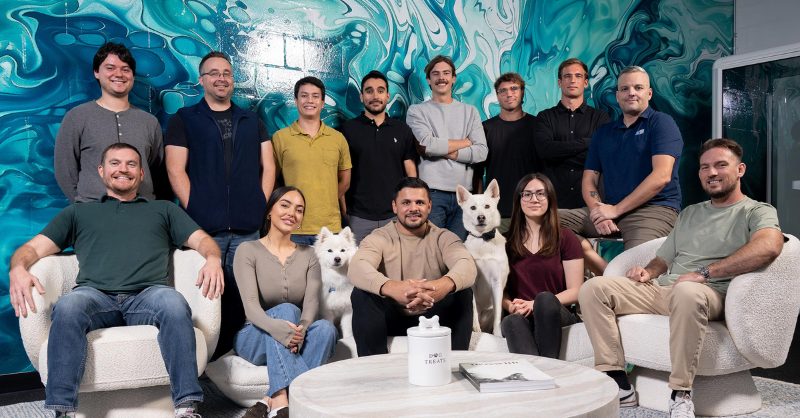
Dailyza has learned that a team of ex-SpaceX engineers has raised $24 million to bring aerospace-grade water technology from spaceflight-style systems into terrestrial markets, a bet that the reliability standards of rockets can translate into cleaner, more resilient water infrastructure.
The funding round, first reported by TFN, underscores a growing investor thesis: water is no longer a “slow” sector. From drought-prone regions and aging municipal pipes to industrial demand for reuse, the market is shifting toward solutions that can deliver measurable performance under harsh conditions—an environment where aerospace engineering culture is designed to thrive.
Why aerospace talent is moving into water
Space programs are forced to solve problems with extreme constraints: limited power, strict weight and space budgets, and near-zero tolerance for system failure. Water systems in spacecraft and launch environments must operate predictably and continuously, often with minimal maintenance windows.
That mindset is increasingly attractive on Earth, where water treatment operators face a different—but similarly unforgiving—set of constraints: fluctuating source quality, tightening discharge regulations, and rising costs for energy and chemicals. For investors, the pitch is straightforward: if a platform can meet aerospace reliability expectations, it may outperform conventional systems in industrial settings where downtime is expensive.
From mission-critical hardware to everyday infrastructure
In practice, “aerospace-grade” often implies disciplined systems engineering, robust sensing and controls, and components designed for durability. Applied to water, those capabilities can translate into improved filtration, higher recovery rates, and better operational visibility—especially in distributed deployments where trained operators are scarce.
What the $24M raise signals for the market
A $24 million round is substantial for a water-focused startup, particularly in a sector where long sales cycles and pilot-heavy procurement can slow growth. The size of the raise suggests investors believe the team can move beyond lab performance and into scaled deployments—typically the hardest step for water technology companies.
While many climate and infrastructure startups compete on novel chemistry or new membranes, aerospace-derived approaches often emphasize integration: hardware, software, and monitoring designed as a single system. That can be compelling for customers who have grown wary of “drop-in” components that require extensive retrofits or create new operational burdens.
Where the technology is likely to be applied first
Commercialization pathways for advanced water systems often begin outside municipal utilities. Early customers typically include industrial and commercial operators with clear economic incentives and the ability to approve projects faster than public agencies.
- Industrial water reuse in sectors such as manufacturing, food and beverage, and energy, where reducing intake and discharge can cut costs and regulatory risk.
- Remote and mobile water treatment for construction, mining, disaster response, and defense-adjacent use cases where reliability and ruggedization matter.
- High-purity water needs for specialized processes, where quality consistency is non-negotiable.
These segments also provide a proving ground for performance data—critical for later expansion into municipal partnerships, where procurement scrutiny is higher and timelines are longer.
The bigger backdrop: water stress meets investor appetite
Water is increasingly framed as both a climate risk and an economic constraint. Drought, contamination incidents, and infrastructure underinvestment have pushed utilities and industry to consider technologies that improve resilience, efficiency, and transparency.
At the same time, venture investors are showing renewed interest in “hard tech” climate solutions—projects that require engineering depth but can build defensible moats through manufacturing know-how, field data, and long-term customer contracts.
What “aerospace-grade” must prove in real-world deployments
Engineering pedigree can open doors, but water customers ultimately buy outcomes. The company will need to demonstrate:
- Lower total cost of ownership, including energy use, consumables, and maintenance.
- Operational stability across variable feedwater conditions.
- Compliance performance under local regulations and testing protocols.
- Serviceability—fast repairs, readily available parts, and clear monitoring.
One of the persistent challenges in water is that performance in controlled environments doesn’t always translate to field conditions. Fouling, biofilm growth, seasonal changes, and operator variability can erode results. The aerospace approach—redundancy, diagnostics, and conservative design margins—may help address those realities, but it must be validated at scale.
What comes next for the ex-SpaceX team
With fresh capital, the immediate priorities are likely to include expanding pilots, building manufacturing and supply chain capacity, and strengthening go-to-market capabilities. In water, the path from prototype to repeatable deployments often hinges on execution: reliable installations, credible performance reporting, and the ability to support customers over multi-year operating periods.
The round also suggests the company will be expected to move quickly toward commercial traction—turning early deployments into standardized offerings that can be sold, installed, and maintained without custom engineering each time.
For a sector hungry for durable solutions, the ex-SpaceX engineers’ bet is that the rigor of spaceflight can raise expectations for water systems on Earth—and that customers will pay for performance they can trust when water is scarce, regulations are strict, and downtime is not an option.