

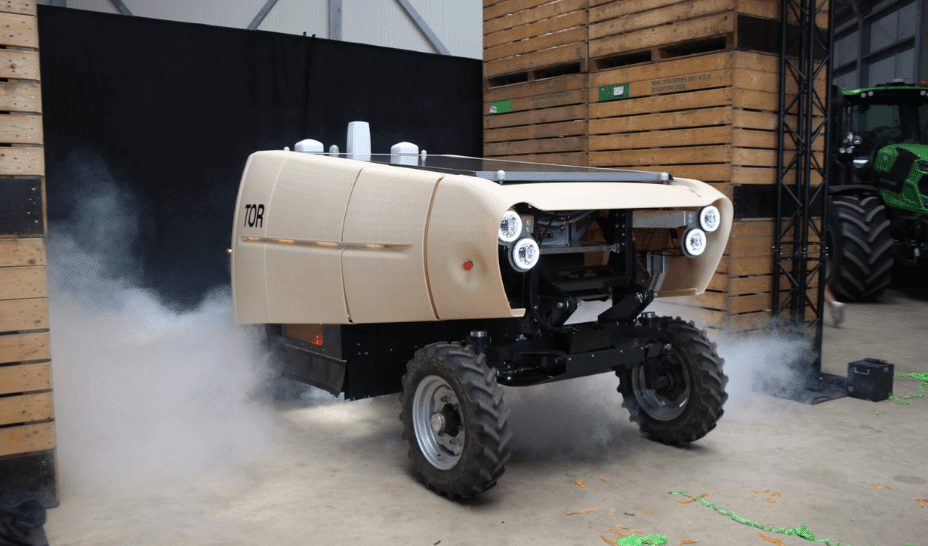
Agreenculture, a French agritech startup focused on autonomous field operations, has raised €6 million to accelerate the rollout of its farming robotics and software across more agricultural sites. The funding, reported by EU-Startups, underscores continued investor interest in technologies that promise to reduce chemical inputs, address labor constraints, and improve farm productivity through automation.
Why investors are backing autonomous agriculture now
Europe’s farming sector is under simultaneous pressure from rising operating costs, tighter environmental rules, and persistent workforce shortages during peak seasons. Against that backdrop, autonomous systems are increasingly pitched as a practical way to keep yields stable while reducing reliance on manual labor and cutting the amount of fuel, fertilizer, and pesticides used per hectare.
For startups like Agreenculture, the opportunity sits at the intersection of agritech, robotics, and precision agriculture. The core promise is straightforward: if a farm can automate repetitive field tasks—such as weeding, mechanical cultivation, or targeted spraying—it can operate more efficiently and document practices more accurately, which is becoming important for compliance and sustainability reporting.
What Agreenculture is building
Agreenculture is developing autonomous farming technology designed to help farms carry out fieldwork with higher accuracy and lower environmental impact. While many agricultural automation efforts focus on a single machine, the broader trend in the sector is moving toward integrated systems: autonomous vehicles paired with sensors, mapping, and decision-support software.
In practice, this category of technology typically aims to:
- Enable autonomous navigation in fields using GPS and onboard perception
- Support precise execution of tasks like weeding or micro-dosing inputs
- Collect operational data that can be used to optimize future field passes
- Reduce overlap and inefficiencies that waste time, fuel, and materials
The value proposition resonates with both large-scale growers seeking operational efficiency and smaller farms looking for alternatives to expensive equipment ownership or hard-to-find seasonal labor.
How the €6 million round could be used
Although the company has not publicly detailed every line item, a €6 million raise at this stage is commonly deployed across several growth priorities in the agritech and robotics space.
Scaling deployments and field validation
Autonomous farming systems must prove reliability across diverse conditions—soil types, crop varieties, terrain, and weather. Funding often supports expanded pilots and commercial deployments to validate performance at scale, including long-duration testing during full growing seasons.
Product development and safety engineering
Autonomy in open fields still demands robust safety systems, remote monitoring, and resilient hardware. Investment typically goes into improving AI algorithms for perception and decision-making, refining navigation, and strengthening fail-safes so machines behave predictably around people, animals, and obstacles.
Commercial expansion in Europe
With European agriculture fragmented across many farm sizes and regulatory environments, go-to-market execution requires local partnerships and support capacity. Funding can help build sales teams, service networks, and training programs—critical factors for adoption in a sector that depends on uptime during narrow seasonal windows.
The wider context: automation, sustainability, and farm economics
Autonomous farming is no longer framed purely as futuristic innovation; it is increasingly discussed as an economic necessity. For many growers, the business case hinges on reducing recurring costs and stabilizing output. Even modest improvements—fewer passes across a field, reduced chemical usage through targeted application, or fewer labor hours—can materially affect margins.
At the policy level, European sustainability goals and evolving rules around pesticide use are also shaping demand. Solutions that enable mechanical weeding, spot treatment, and better documentation of farm practices align with a direction of travel that favors measurable reductions in inputs rather than broad, uniform application.
Still, the sector faces adoption hurdles. Autonomous machines must integrate with existing farm operations, handle edge cases, and be serviceable in rural environments. Pricing models also matter: some farms prefer purchasing equipment outright, while others seek subscription or “robot-as-a-service” approaches to avoid heavy upfront costs.
What to watch next for Agreenculture
With fresh capital, the key indicators for Agreenculture will likely include how quickly it can turn deployments into repeatable commercial rollouts, how its technology performs across crop types, and whether it can build the partnerships needed for distribution and maintenance.
Investors and customers will also be watching for evidence of measurable outcomes—reduced chemical inputs, lower fuel consumption, fewer labor hours, and consistent field performance. In a category where hardware, software, and real-world agronomy must work together, progress is often judged less by lab capability and more by season-by-season reliability.
For Europe’s agritech ecosystem, the round adds another signal that capital continues to flow toward applied automation—tools that can be deployed now, generate farm-level ROI, and help agriculture adapt to economic and environmental constraints without sacrificing productivity.