Breaking News



Popular News



Enter your email address below and subscribe to our newsletter

Experts predict that 2026 will mark the start of commercial integration for humanoid robots and autonomous fleets, rather than a sudden sci-fi transformation.
As the world approaches the end of 2025, a pressing question dominates the technology sector: Has the future finally arrived? While the vision of a society where androids walk the streets and autonomous vehicles handle all commutes remains a staple of science fiction, the reality of 2026 promises a more nuanced transition. Recent developments from Silicon Valley to Shanghai suggest that while 2026 may not be the year robots take over the world, it will be the historic turning point where they begin to visibly drift from research labs into the fabric of daily life.
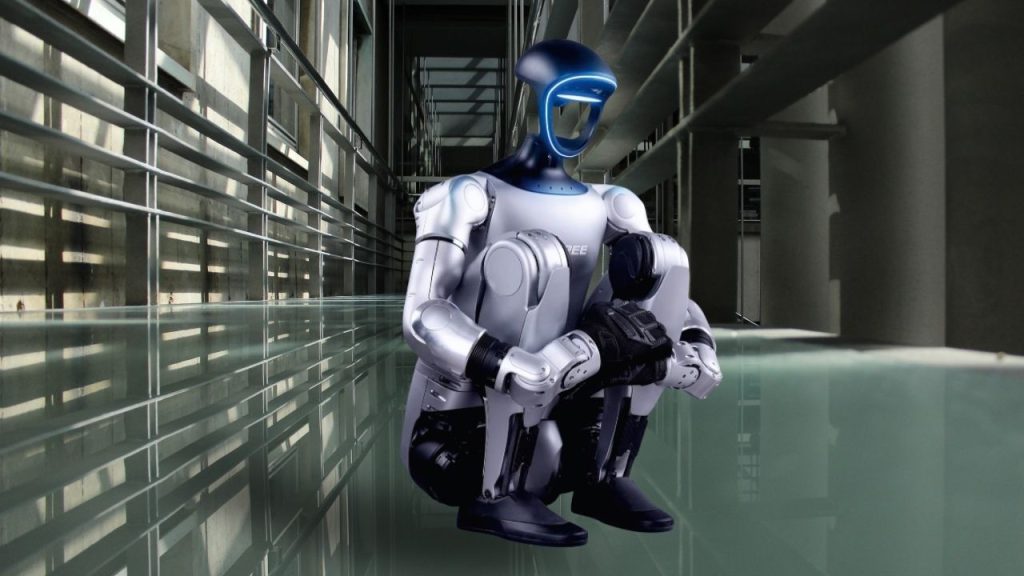
The most significant anticipation for 2026 lies in the commercial deployment of humanoid robots. Companies like Tesla with its Optimus bot, Figure AI with the Figure 02, and Boston Dynamics with the electric Atlas have moved beyond impressive demonstrations to pilot production lines throughout 2025. However, seeing these machines shopping at a local grocery store in 2026 remains unlikely.
Industry reports indicate that 2026 will be the year of the “Blue-Collar Robot.” Major corporations including BMW, Mercedes-Benz, and Amazon have already begun integrating these bipeds into their facilities to handle dangerous, repetitive, and physically demanding tasks. Consequently, robots will effectively “live” in logistics hubs and automotive plants long before they inhabit public streets. For domestic use, safety and cost remain significant barriers. The AI maturity required for a humanoid to navigate a chaotic home environment safely is still developing. Nevertheless, the first “luxury home assistant” models, priced between $20,000 and $30,000, are expected to see a limited release by late 2026 for affluent early adopters.
On the autonomous vehicle (AV) front, 2026 is poised to be the year where “Geofence” barriers begin to crumble. Throughout 2025, Waymo and Tesla standardized driverless taxi services in specific US cities like San Francisco, Phoenix, and Los Angeles. Projections for 2026 show these services expanding into complex urban environments such as Austin, Miami, and New York City.
For residents of major American or Chinese metropolises, seeing a vehicle with an empty driver’s seat will become a mundane occurrence. However, this revolution will not yet reach rural areas or towns with insufficient infrastructure. Level 4 autonomy is set to become mainstream in select zones, while universal Level 5 autonomy remains several years away.
The most likely place for the average citizen to encounter a robot in 2026 is on the sidewalk. Small, cooler-sized delivery bots developed by Starship Technologies, Uber Eats, and various startups are preparing to expand from university campuses to city centers. particularly in cities like London, Tallinn, and Washington D.C., these autonomous couriers are becoming the new standard for “last-mile” delivery.
This expansion brings forth a new social and legal debate: Do sidewalks belong to pedestrians or robots? 2026 is expected to be the year municipal governments enact the first comprehensive laws regulating robotic traffic in pedestrian zones.
Two superpowers are leading the charge into this robotic future, each with distinct strengths:
In summary, waking up in 2026 will not feel like stepping into a different dimension. However, the observant eye will notice the shift. Whether it is a driverless truck on the highway, a six-wheeled box delivering pizza, or news of a “metal colleague” at a local factory, the robotic age is arriving not with a bang, but through a steady, functional integration. 2026 will be remembered as the year robots ceased to be novelties and began their transition into the essential, albeit mundane, infrastructure of modern life.



It’s exciting to see robotics moving toward practical use rather than just futuristic ideas. Small, gradual changes often lead to the biggest impacts in our daily lives, so 2026 could really be a game-changer in making these technologies more accessible and useful.